You’re standing in a showroom in Katy, looking at two “white shaker” door samples that cost $4,200 apart. They look nearly identical. The salesperson can’t clearly explain why. That gap, between what shaker kitchen cabinets appear to be and what they actually are, is where most homeowners overpay or underbuy. This guide breaks down the materials, real install costs across Richmond, Sugar Land, and Cypress, the trade-offs nobody mentions at the quote stage, and how to tell a $180 door from a $480 door. By the end, you’ll know exactly what to ask for and what to walk away from.
What Makes a Cabinet “Shaker” in the First Place?
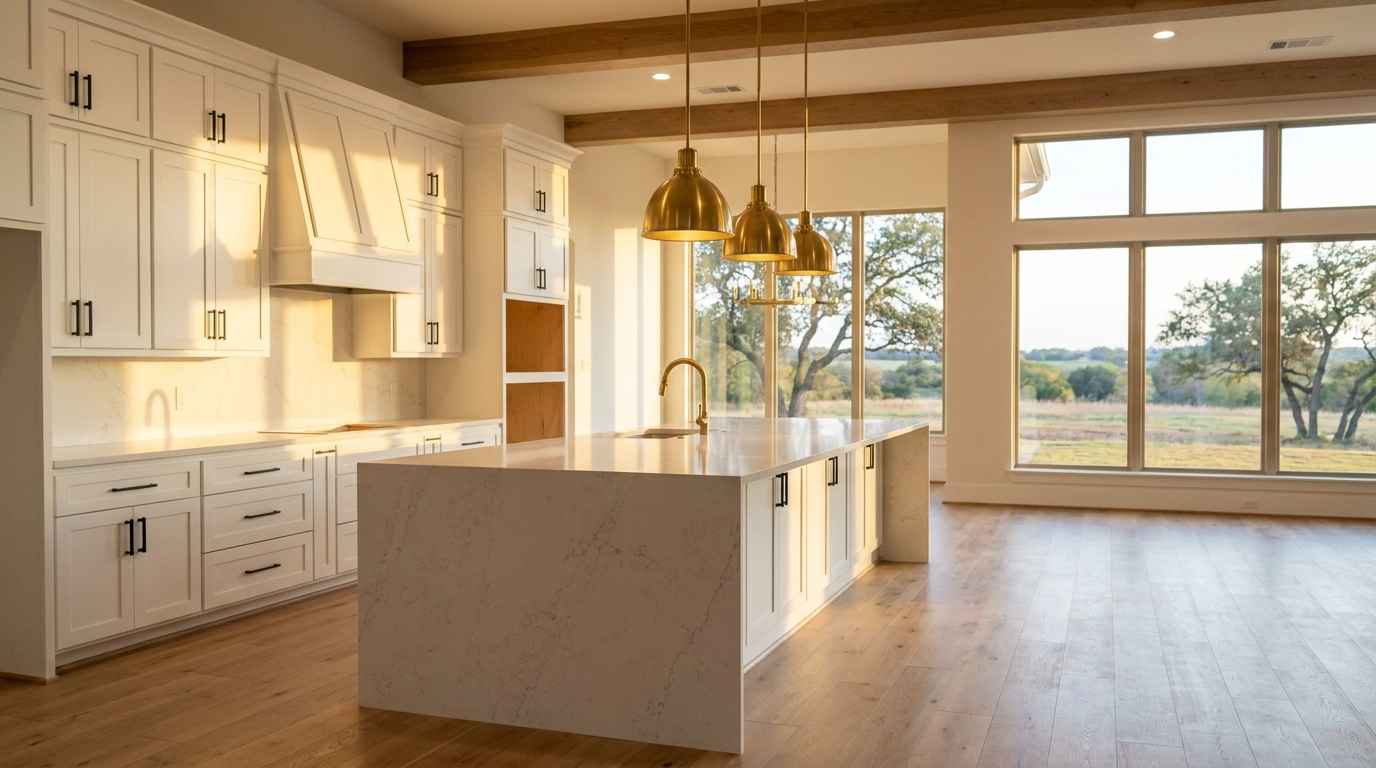
A shaker cabinet is a five-piece door with a recessed flat center panel framed by four straight rails and stiles. The style traces back to the Shaker religious community in 18th-century New England, built around function, clean lines, and zero ornamentation.
That simplicity is why the style has outlasted every kitchen trend since 2005. It reads modern in a flat white, traditional in a cream glaze, and transitional in almost any gray. The problem is that “shaker” describes a shape, not a quality standard. A $90 MDF shaker door from a big-box store and a $470 solid maple shaker door from a custom shop both qualify.
The three things that actually separate them: material, joinery, and finish thickness. Everything else is branding.
Shaker Style Kitchen Cabinets vs. Everything Else
Shaker doors sit between slab (fully flat, modern) and raised-panel (traditional, ornate). That middle position is exactly why they’ve held roughly 60 to 65 percent of new kitchen installs in the US since 2019, according to NKBA trend reports. Designers keep specifying them because resale buyers recognize the look without tying the kitchen to a specific decade.
| Door Style | Visual Weight | Resale Signal | Cleaning Difficulty |
| Slab | Minimal | Modern, can date fast | Easiest |
| Shaker | Balanced | Broad appeal | Moderate, dust sits in the inside corner |
| Raised panel | Heavy | Traditional, narrower appeal | Hardest |
| Beaded inset | Heavy | Regional, farmhouse | Hardest |
If your home is in a Katy or Cypress subdivision built after 2010, shaker is almost always the right call for resale. In older Sugar Land neighborhoods with heavier trim packages, raised panel can still fit better.
White Shaker Kitchen Cabinets: Why They Dominate, and Where They Fail
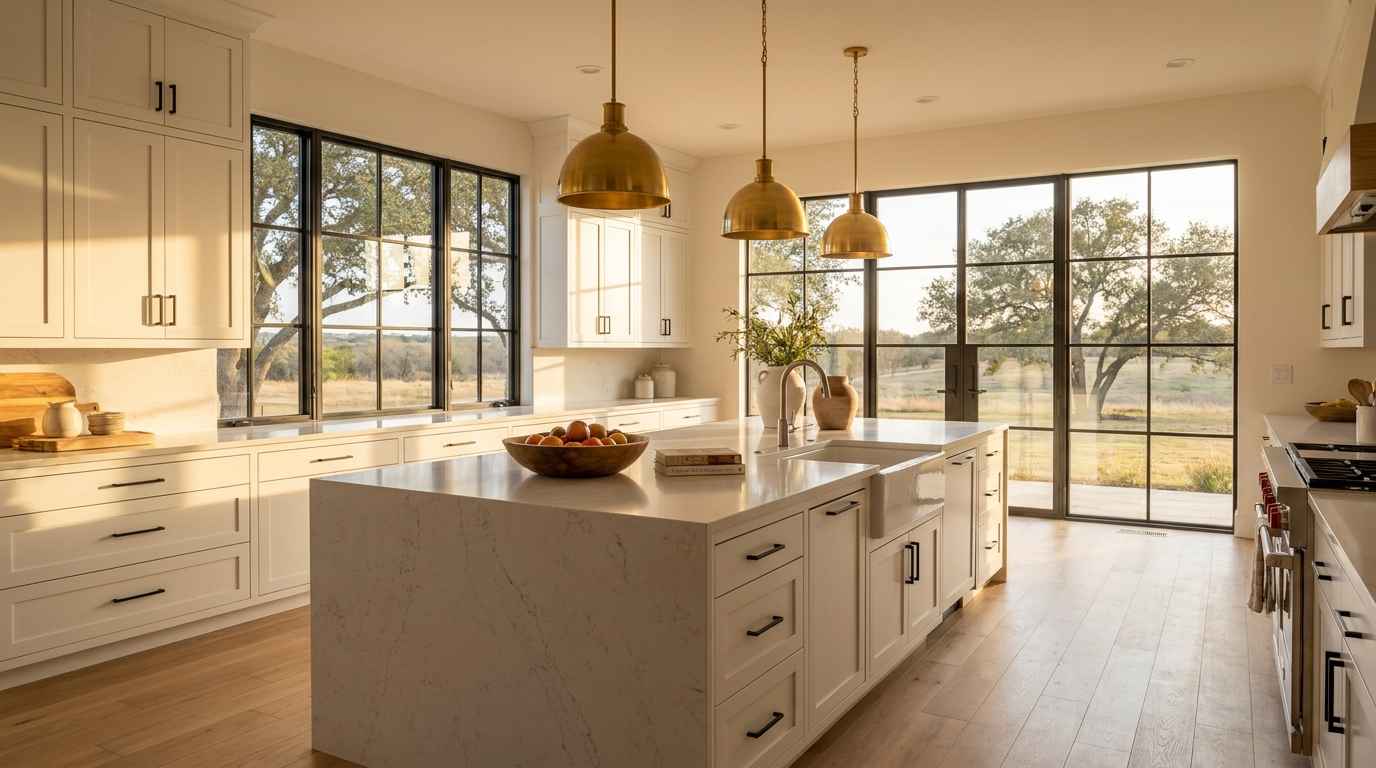
White shaker kitchen cabinets are the most-installed cabinet configuration in North America right now. They reflect light, pair with any countertop, and photograph well for listings.
Where they fail:
- Homes with small children or heavy cooking.Tomato sauce, turmeric, and red wine stain white thermofoil and low-grade paint within the first year.
- Direct west-facing kitchens.UV exposure yellows lower-tier acrylic finishes in 18 to 36 months. In Houston, that matters more than in most US markets.
- Budgets under $8,000 for a full kitchen.Cheap white paint shows every flaw. If you can’t afford conversion varnish or a catalyzed finish, consider a painted gray or a warm off-white instead.
A solid-wood white shaker door with a catalyzed lacquer finish in Katy runs roughly $280 to $420 per linear foot installed as of late 2025. A thermofoil equivalent runs $110 to $160. They look similar on day one. They do not look similar on day 700.
Gray Shaker Kitchen Cabinets: The Quiet Winner for 2026
Gray shaker kitchen cabinets have pulled ahead of pure white in design-forward builds across Richmond and Sugar Land over the past 18 months. The reason is practical. Warm grays hide fingerprints, light scuffs, and the fine grit that tracks in from Texas soil.
Two ranges to know:
- Light warm grays(think Benjamin Moore Revere Pewter or SW Repose Gray). These read as neutral and work like white without the maintenance tax.
- Deep charcoal and slate(SW Iron Ore, BM Kendall Charcoal). Strong on islands, risky on perimeter cabinets in kitchens under 180 square feet.
A two-tone kitchen with gray perimeter and a contrasting island is now the most-requested configuration in local custom builds we see referenced across Houston-area design forums and Houzz project data.
Material Reality: What You’re Actually Buying
This is the section most competitor articles skip. The door you pick is only one part of the cabinet. The box matters more for longevity.
Door Materials Ranked by Real-World Performance
| Material | Lifespan | Humidity Tolerance | Paint Finish Quality | Cost Index |
| Solid maple | 25+ years | Excellent | Best | $$$$ |
| Solid paint-grade (poplar, soft maple) | 20+ years | Very good | Excellent | $$$ |
| MDF center panel, wood frame | 15-20 years | Good | Excellent (no grain) | $$ |
| Full MDF | 10-15 years | Fair | Good | $$ |
| Thermofoil over MDF | 7-12 years | Poor near heat | Uniform but peels | $ |
For Houston’s humidity swings, full solid wood on upper cabinets is often overkill. An MDF center panel with a solid wood frame is the sweet spot. It resists cracking at the panel joint, which is the number one failure mode in painted shaker doors.
Box Construction
Plywood boxes outlast particleboard by roughly a decade in humid climates. Check the side panel thickness. Five-eighths plywood is standard. Half-inch particleboard with a melamine coating is what most stock cabinets ship with, and it sags under quartz countertops over time.
Worth saving a screenshot of this section before your next quote.
Shaker Cabinet Doors: Replace or Full Remodel?
If your existing boxes are plywood and structurally sound, replacing just the shaker cabinet doors and drawer fronts, called a refacing, cuts cost by 50 to 70 percent versus a full tear-out.
Refacing makes sense when:
- Boxes are 10 years old or less
- Layout already works
- Budget is under $15,000
Full replacement makes sense when:
- Layout needs to change
- Boxes are particleboard and swollen at the sink base
- You’re adding an island or extending runs
In Katy and Cypress homes built 2012 or later, most builder-grade boxes are serviceable. Refacing with quality shaker doors often delivers 80 percent of the visual result for 40 percent of the cost.
What It Actually Costs in the Houston Metro
Pricing varies by shop, wood, and finish. Verify current quotes directly with your installer.
| Scope | Katy/Cypress Range | Sugar Land/Richmond Range |
| Refacing only (10×10 kitchen) | $6,500 – $11,000 | $7,000 – $12,500 |
| Stock shaker, full replace | $12,000 – $18,000 | $13,000 – $19,500 |
| Semi-custom shaker | $19,000 – $32,000 | $21,000 – $35,000 |
| Full custom, solid wood | $38,000 – $70,000+ | $42,000 – $75,000+ |
Tariff adjustments on imported RTA cabinets in early 2025 pushed stock prices up roughly 8 to 14 percent. If a quote seems suspiciously low, ask where the cabinets are manufactured.
Pros and Cons, Honestly
Pros
- Style holds resale value across buyer demographics
- Works in almost any home size and layout
- Clean lines hide minor installation imperfections
- Wide price range means a version exists for most budgets
Cons
- The inside corner of the recessed panel collects dust and grease
- Painted finishes show hairline cracks at the panel joint over time
- “Shaker” label is used on products with wildly different quality
- White versions demand more cleaning than the showroom suggests
Conclusion
Shaker kitchen cabinets earn their popularity because the shape works across styles, budgets, and resale scenarios. The real decision isn’t shaker versus something else. It’s which material, which finish system, and which installer matches your home, your cooking habits, and how long you plan to stay. For most Katy, Richmond, Sugar Land, and Cypress homeowners in 2026, a semi-custom painted shaker with MDF center panels and plywood boxes hits the right balance of durability, looks, and cost. Before you sign a quote, compare at least three local shops, ask specifically about box construction and finish type, and request a door sample you can take home for 48 hours.
Pick the cabinet that still looks right on year seven, not just day one.
FAQ SECTION
- Are shaker kitchen cabinets going out of style in 2026? No. Shaker cabinets remain the most-installed door style in North America and show no signs of fading. Because the design is based on function rather than trend, it adapts to modern, traditional, and transitional kitchens equally well. Designers in the Houston metro continue specifying shaker for nearly every new build and remodel under $100,000.
- What’s the difference between shaker and slab cabinets? Shaker doors have a five-piece construction with a recessed center panel. Slab doors are a single flat surface with no framing. Slab reads more contemporary and is easier to clean. Shaker offers broader resale appeal and hides installation imperfections better, which matters more in older homes.
- Are white shaker kitchen cabinets hard to keep clean? Yes, more than showrooms suggest. The recessed panel corner collects grease and dust, and light finishes show fingerprints near handles. A quality catalyzed finish helps significantly. Families with heavy cooking habits or young children often do better with a warm gray or off-white shaker to mask daily wear.
- How long do shaker cabinet doors last? Quality solid-wood or MDF-frame shaker doors last 20 to 25 years with normal use. Thermofoil shaker doors typically last 7 to 12 years before edge peeling appears, especially near dishwashers and ovens. Climate matters. Houston humidity shortens thermofoil lifespan compared to drier markets.
- Can I paint existing shaker cabinets instead of replacing them? Yes, if the doors are solid wood or MDF in good condition. Expect to pay $2,500 to $5,500 for professional spray painting of a typical kitchen. DIY paint jobs rarely match factory finishes and usually show brush marks or rolling texture within a year. Prep and finish chemistry matter more than the paint color.
- Are gray shaker kitchen cabinets a passing trend? Warm grays and greiges are not. Deep charcoal could date faster. Light to medium warm grays function as neutrals and have held steady in design preference surveys for more than a decade. If you’re risk-averse, stay in the warm gray range. If you want a stronger statement, limit bold grays to the island.
- What’s the cheapest way to get a shaker kitchen look? Refacing existing cabinet boxes with new shaker doors and drawer fronts. This typically saves 50 to 70 percent versus a full replacement. The approach only works if your existing boxes are structurally sound, usually plywood construction less than 10 years old. Particleboard boxes with water damage need full replacement.
- Shaker kitchen cabinets or raised panel, which sells a home faster? Shaker. National Association of Realtors data and Zillow listing analysis consistently show shaker kitchens appeal to a wider buyer pool, particularly buyers under 45. Raised panel still performs well in traditional neighborhoods with established trim packages, but the buyer pool is smaller and older.
- Do shaker cabinet doors work with modern handles and pulls? Yes. That flexibility is part of why the style lasts. Matte black, brushed brass, polished nickel, and long bar pulls all work on shaker doors. Avoid ornate handles, which fight the clean lines. For a contemporary look, use longer horizontal pulls. For transitional, use five-inch cup pulls on drawers and knobs on doors.