Perhaps the idea of remodeling basement stairs does not seem very exciting but it is one of the most clever additions you can make to your house. If you are searching for how to remodel basement stairs, you likely want safer steps, a better look, and a design that meets building codes. The old steps in the basement are usually dark, steep, and dangerous, particularly in the older houses. An effective basement staircase modification can not only lead to better safety but increase the value of your house as well as make your basement look and feel like a living space rather than an extension of the house.
This manual tells you all you need to know about how to remodel basement stairs in understandable plain language. You will get to know how to organize the remodel, adhere to the requirements of basement stairs code, select the appropriate materials, make financial decisions, and decide to do the job yourself or contract a professional.
The importance of Remodeling Basement Stairs
Stairs in the basement are used on a daily basis yet most house owners do not care about them. The elderly stairs are usually uneven with missing handrails, ripped treads, dim lightings, or poorly-maintained risers. These concerns enhance the chances of mishaps and falls
The remodeling of a basement stair enhances:
-
Safety through meeting modern code requirements.
-
Looking by being like the rest of your home
-
Not as uncomfortable on higher spacing, light, and grip
-
Resale value through the development of a complete, functional basement access
Whether you are finishing your basement or simply updating old basement stairs, remodeling them is a practical investment.
How to Remodel Basement Stairs: Step-by-Step Overview
Basement stairs can best be remodeled by adhering to a definite process. There is a tendency to hurry with design or materials that they are not planning, and it results in errors.
Step 1: Examine the Stairs that are in place
Begin with the existing staircase of the basement
-
Loose or squeaky steps
-
Uneven riser heights
-
Cracked or warped treads
-
Low headroom
-
Missing or unsafe railings
Determine whether or not the stairs are steep or narrow , Such information has an impact on code compliance and safety.
Step 2: Basement Stair Code Requirement
The first thing to do before beginning any form of basement staircase renovation is to make sure that local building codes are in check. International Residential Code (IRC) is adhered to in most areas.
The major code requirements of the basement stairs generally consist of:
-
Highest riser height 73/4 inches
-
At least 10 inch deep treads
-
6 feet 8 inches headroom minimum
-
Constant handrail on one side at least
-
Good lighting in the staircase at the bottom and at the top
Violation of code rules may result in unsuccessful inspection or dangers
Step 3: Choose Structural or Cosmetic Remodeling
All stair remodels in the basement do not need structural adjustment
-
The cosmetic upgrades encompass new treads, risers, paint or trim or railings
-
Structural modifications include changing the angles of stairs, substituting stringers or augmenting headroom.
If your stairs already meet code, cosmetic upgrades may be enough. If they do not, structural changes become necessary.
Basement Stair Remodel Ideas That Improve Safety and Style
Modern basement stair remodel ideas focus on safety first, then design.
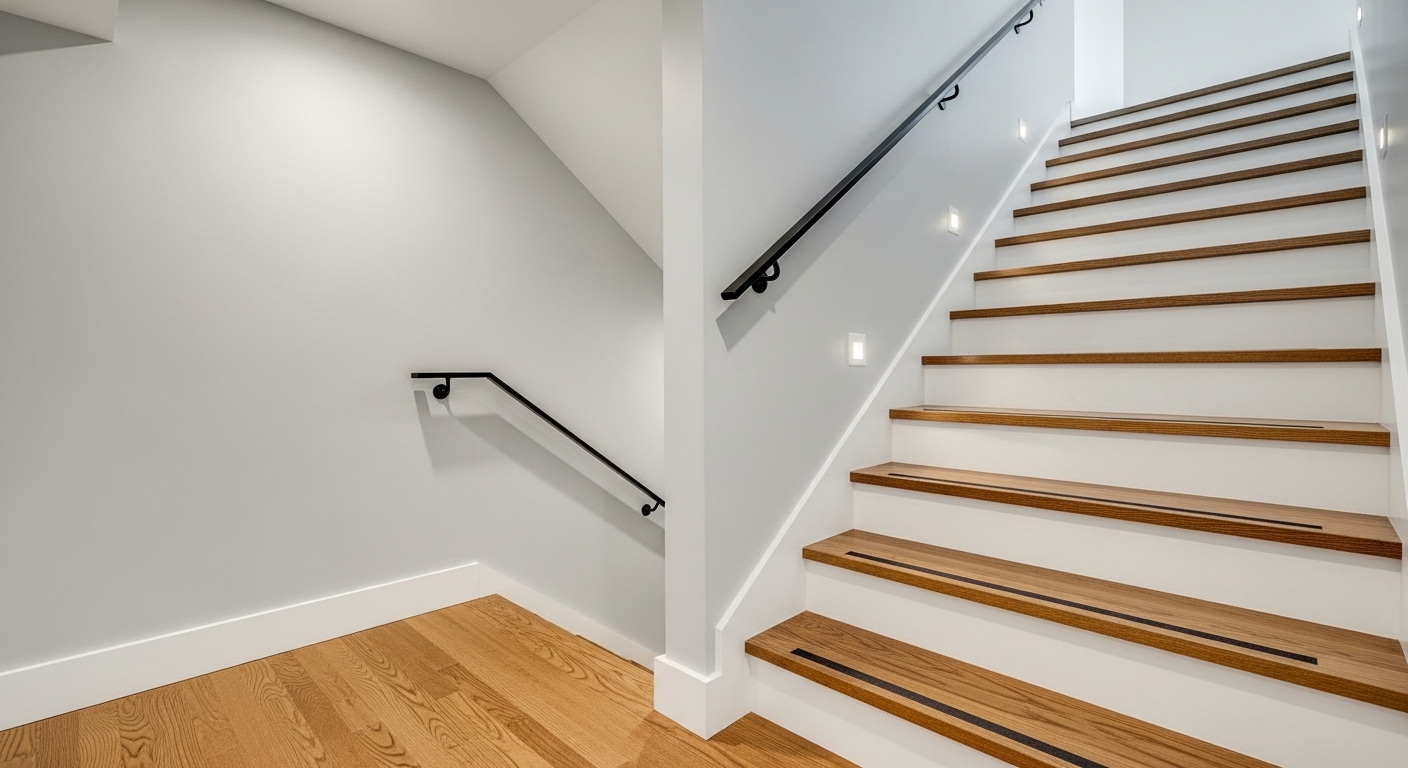
Update Stair Treads and Risers
Replacing basement stair treads is one of the most effective upgrades. You can use:
-
Hardwood for a clean, modern look
-
Engineered wood for durability
-
Non-slip tread covers for safety
-
Carpet runners for warmth and traction
Risers can be painted white or covered with wood for contrast.
Improve Basement Stair Railings
Basement stair railing options affect both safety and appearance. Popular choices include:
-
Wooden railings with square balusters
-
Metal railings for a modern style
-
Wall-mounted handrails for narrow staircases
A secure, code-compliant handrail is not optional—it is essential.
Finish the Basement Stairwell
Finishing basement stairwells makes a huge visual difference. Consider:
-
Drywall instead of exposed framing
-
Light paint colors to brighten the space
-
Recessed or wall-mounted lighting
-
Simple trim for a clean finish
Good lighting reduces accidents and makes stairs feel more welcoming.
Basement Stair Safety Upgrades You Should Not Skip
Safety should always guide your design choices when remodeling basement stairs.
Important safety upgrades include:
-
Anti-slip tread surfaces
-
Proper lighting on every step
-
Consistent riser height
-
Solid handrails secured to wall studs
-
Clear headroom without obstacles
These upgrades protect children, guests, and older adults.
How Much Does It Cost to Remodel Basement Stairs?
The cost to remodel basement stairs depends on the scope of work, materials, and labor.
Average Cost Breakdown
-
Basic cosmetic remodel: $500–$1,500
-
Mid-range renovation: $1,500–$3,500
-
Full structural rebuild: $3,500–$6,000+
Factors that affect cost include:
-
Material choice
-
Stair size and layout
-
Permit requirements
-
Contractor labor rates
DIY basement stair renovation can reduce labor costs but may increase risk if done incorrectly.
DIY Basement Stair Renovation vs Hiring a Professional
Many homeowners ask if they can remodel basement stairs themselves.
When DIY Makes Sense
DIY works well for:
-
Painting stairs
-
Replacing stair treads
-
Installing simple handrails
-
Adding lighting
These tasks require basic tools and skills.
When to Hire a Professional
Hire a contractor if the project involves:
-
Structural changes
-
Code compliance issues
-
Headroom adjustments
-
Stair stringer replacement
Mistakes in stair construction can lead to serious safety problems.
Common Mistakes to Avoid When Remodeling Basement Stairs
Avoiding mistakes saves time and money.
Common basement staircase renovation mistakes include:
-
Ignoring building codes
-
Using slippery materials
-
Skipping proper lighting
-
Installing weak handrails
-
Mixing inconsistent riser heights
Careful planning prevents these issues.
Choosing the Right Materials for Basement Stairs
Material choice affects durability, safety, and appearance.
Best Materials for Basement Stair Treads
-
Hardwood: durable and attractive
-
Engineered wood: stable and cost-effective
-
Laminate: budget-friendly but less durable
-
Carpet: soft and slip-resistant
Avoid glossy finishes that increase slipping risk.
Paint and Finish Tips
Use:
-
Semi-gloss or satin paint
-
Light colors for visibility
-
Durable floor coatings for high traffic
These choices improve longevity and safety.
How Remodeling Basement Stairs Adds Home Value
A finished basement entrance increases perceived home quality. Buyers notice safe, clean, and modern stairs.
Benefits include:
-
Higher resale appeal
-
Fewer inspection issues
-
Better basement usability
A well-done basement stair remodel supports long-term value.
Final Thoughts on How to Remodel Basement Stairs
Learning how to remodel basement stairs helps you create a safer, better-looking home. Whether you choose a simple cosmetic update or a full staircase renovation, planning is key. Always follow basement stair code requirements, prioritize safety, and choose materials wisely. With the right approach, your basement stairs can become a functional and attractive part of your home instead of a hidden hazard.
Frequently Asked Questions (FAQs)
How much does it cost to remodel basement stairs?
Costs usually range from $500 to $6,000 depending on materials and structural work.
Do basement stairs have to meet building code?
Yes, basement stairs must meet local building code requirements for safety.
Can I remodel basement stairs myself?
You can handle cosmetic updates, but structural changes require a professional.
What is the safest design for basement stairs?
Even risers, non-slip treads, proper lighting, and solid handrails create the safest design.
How do you finish unfinished basement stairs?
Finish them with drywall, paint, proper lighting, and code-compliant railings.