Most Richmond homeowners start a remodel the same way. They get three quotes, pick the middle number, and hope for the best. Sometimes that works. Often it doesn’t, because the quote isn’t the whole story and the number is rarely what you end up paying.
Fort Bend County is one of the fastest-growing regions in Texas, and the kitchen and bath remodeling contractors serving Richmond TX range from genuinely excellent to deeply unreliable. The difference isn’t always obvious from a website or even a first meeting. This guide covers what your project actually costs in 2026, how the Richmond market is different from the rest of Greater Houston, and specifically what to look for before you sign anything.
Why Richmond TX Is a Different Remodeling Market Than the Rest of Houston
Richmond gets lumped in with Greater Houston, but the remodeling dynamics here are distinct and they affect your project directly.
Fort Bend County has been one of the top five fastest-growing counties in the United States for most of the past decade. Communities like Harvest Green, Aliana, Long Meadow Farms, and Pecan Grove filled in fast with new construction homes built between 2005 and 2020. A significant portion of that stock came with builder-grade kitchens and bathrooms, meaning functional but deliberately value-engineered: stock cabinets, basic granite, entry-level fixtures, and laminate flooring that looks fine at move-in and starts showing its limitations around year seven.
By 2026, a large wave of those homes are hitting the age window where owners are ready to upgrade. That’s created sustained demand for remodeling contractors in Richmond that hasn’t eased. Contractor schedules are full, good crews are busy, and the homeowners who move quickly on decisions get the start dates they want. Those who wait often find themselves pushed into the following quarter.
The humidity factor is real too. Average annual humidity in Fort Bend County runs high, and it punishes certain material choices that would perform fine in drier Texas climates. Particleboard cabinet boxes absorb moisture over time and swell at the joints. Certain flooring adhesives degrade faster. Grout selections that might last fifteen years in El Paso need more attention here. Any contractor who doesn’t bring this up during your design conversation either isn’t experienced enough with this market or isn’t paying close enough attention to your project.
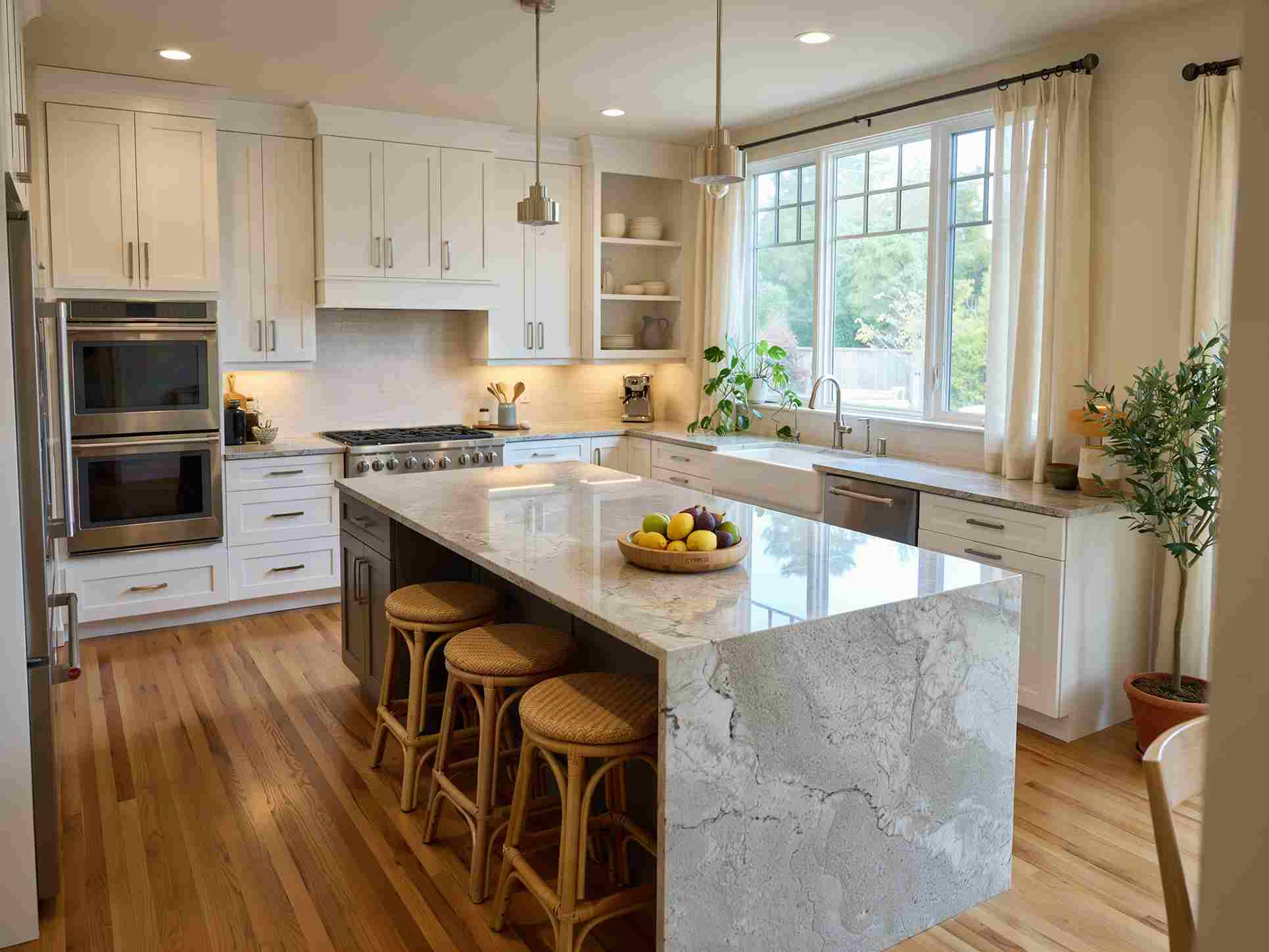
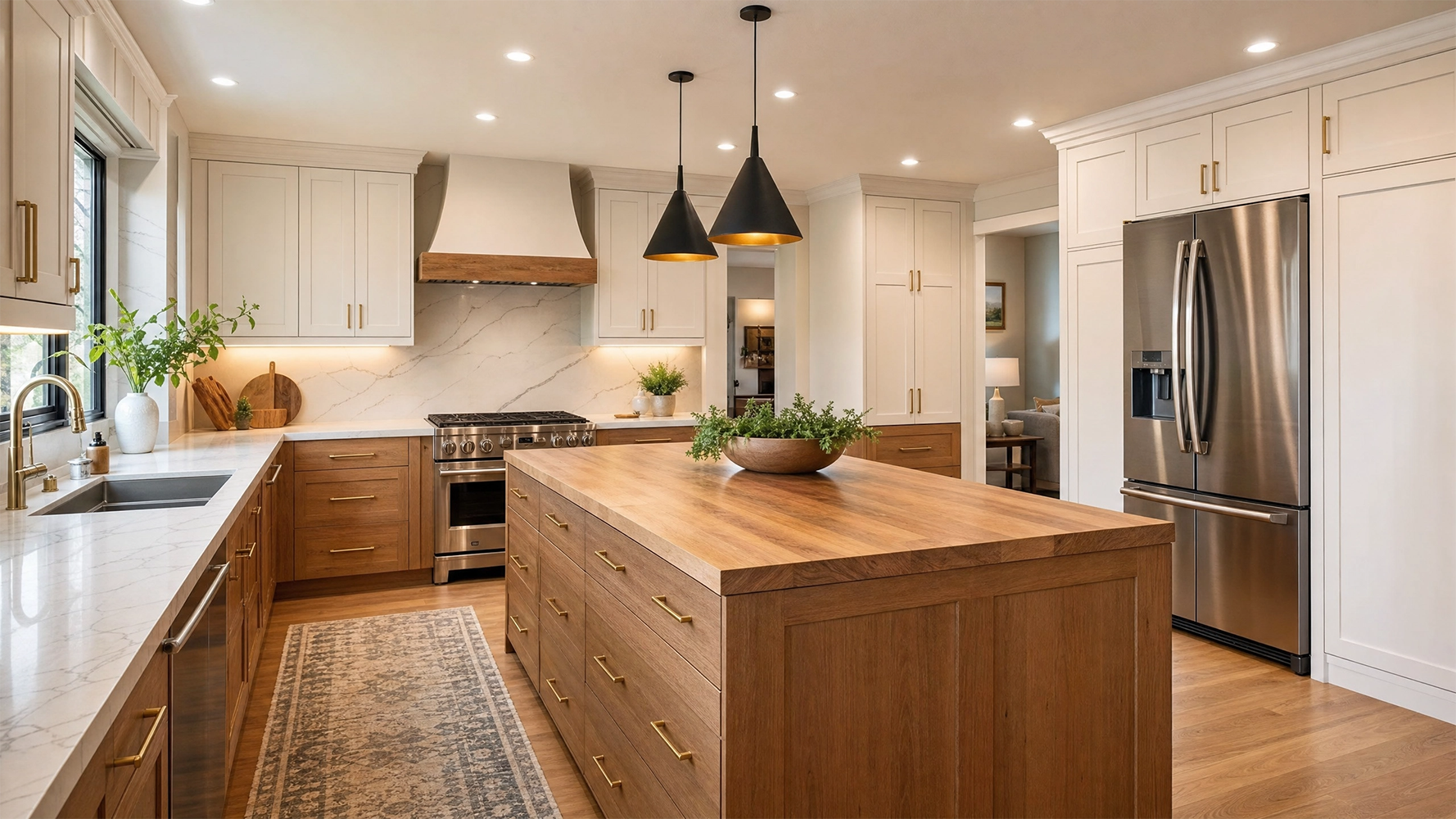
What Kitchen Remodeling Actually Costs in Richmond TX in 2026
Cost transparency is where most contractor websites go deliberately vague. Here’s an honest breakdown for the Richmond market.
Kitchen remodeling costs in Fort Bend County track closely with the broader Houston metro. Labor rates here are moderate compared to coastal markets but have risen meaningfully over the past two years as demand outpaced the skilled trades workforce. Material costs reflect national supply chains, with some local variation based on what distributors serve this area.
| Scope | What’s Included | Richmond TX Budget Range |
|---|---|---|
| Cosmetic refresh | Cabinet door/hardware replacement, new countertops, backsplash, paint | $10,000 to $22,000 |
| Mid-range remodel | New cabinets, countertops, sink, fixtures, flooring, lighting | $25,000 to $50,000 |
| Full remodel, same layout | Complete gut, custom or semi-custom cabinets, all new finishes | $45,000 to $75,000 |
| Full remodel with layout changes | Everything above plus plumbing/electrical relocation, possible structural work | $65,000 to $110,000+ |
The single biggest cost variable isn’t material quality. It’s whether the layout moves. Keeping plumbing and gas lines where they are keeps the project predictable. The moment you relocate a sink or want the range on a different wall, you’re adding licensed trade work, permit requirements, and coordination time that doesn’t show up clearly in early estimates.
Cabinets typically represent 30 to 40 percent of a kitchen remodeling budget. For Richmond homeowners in newer construction with standard ceiling heights and rectangular layouts, semi-custom cabinets hit a practical sweet spot: meaningfully better than what the builder installed, and significantly less expensive than fully custom. Custom cabinetry makes sense when the kitchen has non-standard proportions, a design requirement no catalog can meet, or a long-term ownership situation where maximizing storage and function is worth the premium.
Quartz countertops have become the dominant choice across Fort Bend County kitchens as of 2025 and into 2026, largely replacing granite in mid-range and above projects. The combination of durability, low maintenance, and consistent appearance in photography (which matters to homeowners who anticipate resale) has made it the practical default at the $55 to $90 per square foot installed range.
Always verify pricing directly with your contractor before finalizing a budget. Material costs and labor rates in the Houston area shift, and what a number looked like six months ago may not reflect what you’ll be quoted today.
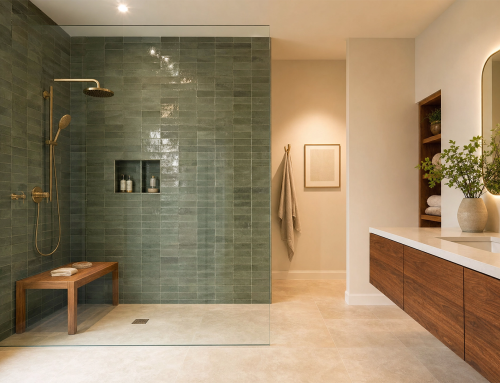
What Bathroom Remodeling Costs in Richmond TX
Bathrooms concentrate a lot of trades into a small space, which is why they cost more per square foot than almost any other room in the house.
| Scope | What’s Included | Richmond TX Budget Range |
|---|---|---|
| Shower conversion or replacement | New tile, waterproofing, fixtures, glass door | $6,000 to $15,000 |
| Full guest bath remodel | Tile, vanity, toilet, fixtures, mirror, lighting | $12,000 to $25,000 |
| Full master bath renovation | Custom shower, freestanding or built-in tub, double vanity, full tile | $22,000 to $60,000 |
| Primary bath with layout changes | All above plus plumbing relocation, possible structural modifications | $45,000 to $80,000+ |
Three things drive bathroom remodel costs up faster than homeowners expect.
Tile labor. Tile installation is skilled work, and experienced tile setters in Fort Bend County are not cheap or easy to schedule. Complex patterns, large format tiles, and heated floor systems all add installation time. Budget for tile labor separately from tile material; the gap between those two numbers surprises most first-time remodelers.
Waterproofing. This is the part of a bathroom renovation that’s completely invisible after completion and completely critical to the project’s longevity. The membrane behind your shower tile, the way the pan is sloped, the sealing around fixtures at penetration points: all of it determines whether your shower is still performing correctly at year ten or whether you’re dealing with moisture damage behind the walls. Any contractor who can’t speak specifically to their waterproofing system and installation method is a contractor worth pressing harder on this point.
Ventilation. Richmond’s humidity means bathroom exhaust fans aren’t optional. Undersized fans, fans vented into the attic instead of outside, or fans installed without proper sealing create moisture accumulation that damages drywall, promotes mold, and shortens the life of every finish in the room. This is an area where cutting corners during construction creates expensive problems a few years out.
The Contractor Vetting Problem Nobody Talks About
The Richmond area has a contractor availability gap that creates a specific hiring challenge in 2026.
Demand is high. Good contractors are booked. That means homeowners under time pressure often end up looking at a second tier of contractors who have availability specifically because they’re not in high demand. This isn’t always obvious. A contractor with a professional website, decent photos, and a smooth sales conversation can still be someone who cuts corners on the work that matters most, the parts you can’t see after the drywall goes back up.
The solution is a more rigorous vetting process before you commit, not after.
The Vetting Questions That Actually Reveal Something
Most “questions to ask your contractor” lists are generic. These ones aren’t:
- Who specifically installs the tile on your projects, your own employee or a subcontractor? (If subcontracted, how long have you worked with them?)
- What waterproofing system do you use in shower applications, and who installs it?
- Can you show me a project you completed at least two years ago that I can visit or speak with the homeowner about? (Asking about older projects reveals whether their work holds up, not just whether it looked good at move-in.)
- How many projects will your crew be running at the same time as mine?
- What’s your process when a problem shows up mid-project that wasn’t in the original scope?
- What exactly does your warranty cover, and what doesn’t it cover?
- Who pulls the permits, and will you provide copies?
Question three is the one most homeowners skip. New project photos prove a contractor can make a kitchen look good on the day it’s photographed. A project two years out tells you whether the tile still looks right, whether the cabinet doors are still aligned, whether the grout held. That’s a different and more useful data point.
Red Flags That Get Overlooked
The obvious ones are obvious: large upfront cash payment demands, no written contract, no insurance documentation.
The less obvious ones include contractors who never push back on anything you want. A contractor agreeing to relocate plumbing, remove a load-bearing wall, and add a kitchen island without mentioning a single structural or permitting consideration isn’t an agreeable professional. They’re either inexperienced or telling you what you want to hear. Real expertise involves saying no, or at least “here’s what that actually involves” when a plan has complications.
Watch the communication pattern during the quoting phase too. A contractor who takes a week to return calls or emails during the sales process, when they’re presumably motivated to win your business, will not become more responsive once the contract is signed and your deposit is in their account.
Kitchen vs. Bath: Which Project Makes More Sense First for Richmond Homeowners?
This is a question most Richmond homeowners face, and the honest answer depends on two things: how you use the house and what your timeline looks like.
If You’re Staying Long-Term
Do the kitchen first. Kitchens are used dozens of times per week by every person in the house. A well-designed kitchen with proper storage, good workflow, and durable finishes improves daily life in a way that’s hard to overstate. The daily friction of a kitchen that doesn’t work well compounds over years. Eliminating it compounds the other way.
Bathrooms matter enormously for comfort and resale, but unless your current bathroom has a functional problem, meaning a layout that doesn’t work, a shower that doesn’t hold water, or a space too small for practical use, it can follow the kitchen on a sensible timeline.
If You’re Planning to Sell Within Three Years
The calculation shifts. In Richmond’s housing market, updated kitchens and master bathrooms are the two most scrutinized rooms by buyers, and dated finishes in either space create pricing pressure during negotiations. A mid-range kitchen refresh, new countertops, cabinet door replacement, new backsplash, and updated lighting can cost $15,000 to $22,000 and significantly improve how a home photographs and shows.
A full $60,000 custom kitchen rarely returns its cost at resale in Fort Bend County unless the home price supports it. Matching the investment level to the neighborhood price ceiling is a judgment call worth making before you commit to a scope.
Why the Design Phase Matters More Than Most Homeowners Realize
Most Richmond homeowners think the hard decisions are about tile patterns and cabinet colors. Those matter, but they’re not where projects go wrong.
Projects go wrong during design when storage isn’t planned for how the household actually lives, when appliance selections are made without checking rough-in dimensions, when cabinet hardware is ordered after installation and doesn’t fit the door profile, or when a countertop material is chosen based on appearance without understanding maintenance requirements in a household with kids and pets.
A contractor who walks you through these practical considerations before the project starts, not during it, is doing the job correctly. Design is where mistakes are free. Once materials are ordered and work has started, they’re expensive.
At Your Dream Remodeling, our Richmond homeowners work with our design team through our Houston showroom before a single material is ordered. You can see cabinet finishes, countertop samples, and tile selections in person, under real lighting, next to each other, which is a completely different experience than choosing from product photos online. We’re a Best of Houzz award winner, a member of the Greater Houston Builders Association and the National Tile Contractors Association, and we back every project with a one-year labor warranty. Call us at 281-550-8900 or schedule a free in-home consultation to get the conversation started.
The Permit Question Richmond Homeowners Get Wrong
A common misconception: “It’s just a kitchen update, I don’t need permits.”
Whether you need permits in Richmond TX depends on scope, not on how the project is described. Cosmetic work that doesn’t touch plumbing, electrical, or structure typically doesn’t require permits. Any work that moves a drain, relocates a gas line, adds circuits, or alters structure does. In Fort Bend County, unpermitted work on structural or mechanical systems creates real problems at resale when a buyer’s inspector finds it, and they usually do.
A reputable remodeling contractor in Richmond pulls permits where they’re required, has the project inspected, and closes out the permit properly. This protects the homeowner. A contractor who suggests skipping permits to save time or money is putting their convenience ahead of your liability.
Conclusion
Richmond TX homeowners searching for kitchen and bath remodeling contractors in 2026 are operating in a market where demand is high, good contractors are busy, and the gap between an excellent remodel and a frustrating one often comes down to decisions made before the first tool is picked up.
Know your scope before you call anyone. Understand that layouts that move cost significantly more than layouts that stay. Vet contractors on the quality of their process, not just the quality of their photos. Ask about the work that’s invisible after completion, the waterproofing, the permits, the subcontractor relationships, and the warranty terms.
Your Dream Remodeling serves Richmond TX as a core service area, with a proven track record across Fort Bend County kitchens and bathrooms at every scope level. Schedule a free in-home consultation at 281-550-8900 or through our website. Bring your ideas and your room dimensions. We’ll give you an honest scope, a realistic number, and a clear picture of what your project involves.
Get the kitchen and bathroom right the first time. It’s the only timeline that makes sense.
FAQ Section
What do kitchen and bath remodeling contractors in Richmond TX typically charge in 2026?
For kitchen work in Richmond, a cosmetic refresh runs $10,000 to $22,000. A full mid-range remodel with new cabinets and finishes typically falls between $25,000 and $50,000. Bathroom remodels range from $6,000 for a basic shower conversion to $60,000 for a full master bath renovation. Layout changes, meaning moving plumbing or electrical, push costs significantly higher in any scope. Always get an itemized quote and verify current pricing directly with your contractor before committing to a budget.
How do I know if a remodeling contractor in Richmond TX is actually good?
Look past the website and recent project photos. Ask to speak with a homeowner from a project completed at least two years ago, because that tells you whether the work holds up over time, not just on installation day. Ask specifically who does the tile work and waterproofing, whether they’re employees or subcontractors, and how long the contractor has worked with those trades. Ask what the warranty covers and what it excludes. How a contractor answers questions about their process reveals more than how they describe their finished work.
Do I need permits for a kitchen or bathroom remodel in Richmond TX?
It depends entirely on what the project involves. Cosmetic work that doesn’t move plumbing, electrical, or structure generally doesn’t require permits. Any project that relocates a drain, adds circuits, touches gas lines, or alters a wall may require permits from Fort Bend County and the City of Richmond. A professional contractor will know which permits apply to your scope and should pull them on your behalf. Unpermitted mechanical or structural work creates disclosure and liability problems at resale.
What’s the most common mistake Richmond homeowners make when hiring a remodeling contractor?
Choosing based on price alone. The lowest quote almost always reflects something: thinner margins on materials, less experienced labor, skipped steps in the waterproofing or substrate preparation, or a timeline that assumes nothing goes sideways. A remodel that comes in $8,000 lower at signing and then requires $15,000 in remediation two years later isn’t a savings. Vetting the process, not just the price, is the decision that matters most.
How long does a kitchen remodel take in Richmond TX?
A cosmetic kitchen refresh typically runs two to four weeks of active work. A mid-range remodel with new cabinets, countertops, and flooring generally takes six to ten weeks from demolition to final walkthrough. A full custom kitchen with layout changes can run three to five months. Factor in lead times too: popular cabinet lines and custom fabrication run six to fourteen weeks from order to delivery in 2026. Starting conversations early is the single most effective way to protect your timeline.
Should I remodel the kitchen or bathroom first?
For long-term homeowners, the kitchen almost always delivers more daily quality-of-life improvement because it’s used by everyone in the household multiple times a day. For homeowners planning to sell within two to three years, the answer depends on which space is further below neighborhood norms and which update delivers the better return at your price point. In Richmond TX, both kitchens and master bathrooms carry significant weight with buyers in the Fort Bend County market.
What’s the difference between a remodeling contractor and a general contractor?
In practice, both coordinate subcontractors and manage construction. The meaningful difference is specialization. A remodeling contractor focuses on residential renovation work and typically understands finish quality, material selection, and the specific sequencing of kitchen and bath projects in depth. A general contractor handles a broader range of project types and may have less specific experience with the finish-intensive details that make a kitchen or bathroom remodel succeed. For kitchen and bath specifically, a contractor whose primary business is residential remodeling is usually the better fit.
Does Your Dream Remodeling serve Richmond TX?
Yes. Richmond TX is a primary service area for Your Dream Remodeling alongside Houston, Katy, Sugar Land, Cypress, Missouri City, and Bellaire. They offer a free in-home consultation, a Houston showroom where you can review material selections in person, and a one-year labor warranty on all installation work. Contact them at 281-550-8900 or schedule through their website to get started.
What questions should I ask before signing a remodeling contract?
Ask for an itemized scope of work, not a lump-sum number. Confirm who handles licensed trades like plumbing and electrical, and whether those subcontractors are licensed in Texas. Clarify the payment schedule and when the final payment is due. Ask what happens if additional problems are discovered after demolition. Confirm the warranty terms in writing. And ask specifically how many active projects the crew will be running during yours, because that directly affects how much attention your project gets.
Is Richmond TX a good area to invest in a kitchen or bath remodel?
Generally yes, with the right scope. Fort Bend County remains one of the stronger residential real estate markets in Texas, and updated kitchens and bathrooms support both resale value and speed of sale. The key is matching the investment to the home’s price tier. A $90,000 custom kitchen in a neighborhood of $350,000 homes typically won’t return its full cost at resale. A $35,000 mid-range remodel in the same neighborhood almost always does, and it dramatically improves daily livability in the meantime.