
What a Master Bathroom Remodel Really Costs and Looks Like in 2026
You walk into your master bath, and right away you notice the cracked grout, the vanity from 2004, and the lighting that makes everyone look tired. So you want it fixed. But every quote you get back sounds different, and on top of that, half the online articles still quote costs from 2019. Here’s the reality: a master bathroom remodel in 2026 sits in a very different cost environment than it did two years ago. Even more importantly, the decisions that save you money are usually not the ones most blog posts talk about. In this guide, you’ll find what the work actually costs in the Houston metro, which upgrades pay off, and how to pick a contractor without getting burned.
What is the average cost to remodel a master bathroom in 2026?
In the Houston area, a standard master bathroom remodel runs between $18,000 and $45,000 in 2026. That said, higher-end builds in Katy, Cinco Ranch, and Cypress often cross $70,000. For context, the 2024 Houzz U.S. Bathroom Trends Study put the national median spend for master bath remodels at $13,500. However, that figure includes cosmetic refreshes, not full gut renovations.
On the material side, costs rose roughly 6 to 9 percent between 2023 and late 2025 according to National Kitchen and Bath Association (NKBA) reporting. Tile, plumbing fixtures, and custom cabinetry led the jump. Meanwhile, labor in Harris and Fort Bend counties climbed even faster because skilled trades stayed tight through 2025.
With that in mind, here’s a realistic 2026 cost breakdown for the Houston metro:
In the Houston metro, master bathroom remodels typically fall into three clear tiers, and knowing where you sit helps you plan realistically.
At the entry level, a budget refresh runs $8,000 to $15,000. For that range, you’re looking at a new vanity, toilet, mirror, updated lighting, fresh paint, and a re-glazed tub rather than a full tear-out. It’s the right call when the layout works and you mainly need the room to look and feel current.
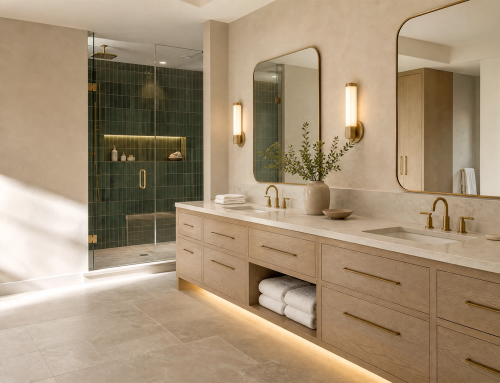
Step up to the mid-range remodel, which lands between $18,000 and $35,000, and the scope changes meaningfully. At this tier, you can expect a new tile floor and shower, quartz countertops, a custom vanity, and upgraded fixtures throughout. This is where most Katy and Cypress homeowners end up because it balances cost with a noticeable transformation.
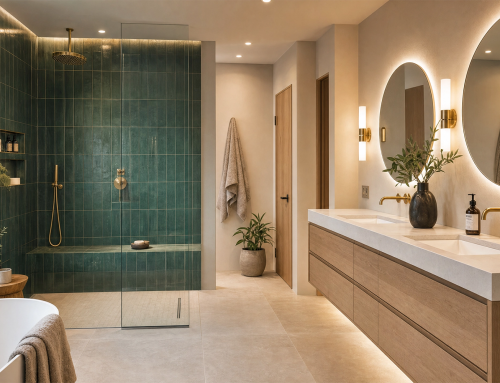
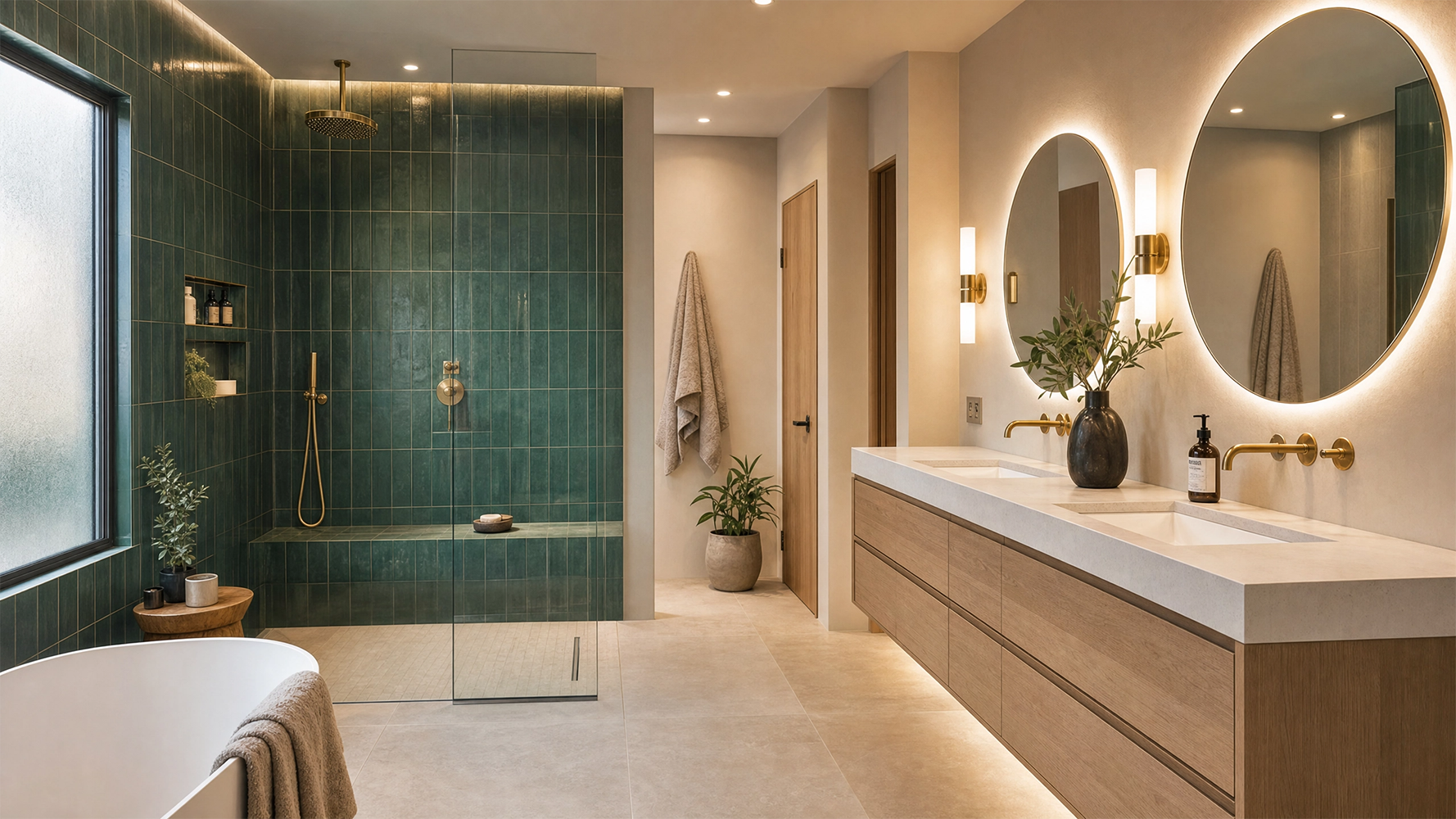
At the top end, a high-end full gut starts around $45,000 and climbs past $90,000 depending on finishes and square footage. Here, you’re paying for layout changes, a freestanding tub, a curbless walk-in shower, heated floors, and smart fixtures. It’s the right investment for homeowners staying long-term or building in neighborhoods like Cinco Ranch where resale expectations are higher.
Before signing any contract, verify current material pricing with your contractor. Fixture lead times shifted again in Q3 2025 after several major suppliers adjusted catalogs.
Where the money actually goes
Most homeowners assume tile and cabinets are the big line items. In reality, they’re not. Instead, plumbing relocation, shower waterproofing, and demolition eat the budget faster than anything else.
The hidden costs nobody quotes upfront
- Moving a toilet or shower drain: $800 to $2,500 per fixture
- Schluter or Kerdi shower waterproofing: $1,200 to $3,000
- Subfloor repair after tear-out: $600 to $2,000 (common in Houston homes built before 2005 due to slab moisture)
- Permit and inspection fees in Katy and Fort Bend County: $150 to $600
- Dumpster and disposal: $400 to $900
To put that in perspective, in our review of bid sheets from Katy-area homeowners, the difference between a $22,000 estimate and a $34,000 final invoice almost always came down to three things: drain relocation, unexpected subfloor rot, and mid-project tile upgrades.
Master bathroom remodel ideas that still make sense in 2026
Design trends shift every year. Resale-friendly decisions, on the other hand, do not. With that in mind, here are the ideas holding up well right now in Texas homes.
Walk-in showers over garden tubs
Freestanding tubs look great in photos. In practice, though, most owners of homes in Cypress and Richmond use the shower 95 percent of the time. For that reason, replacing a builder-grade garden tub with a large walk-in shower, and then keeping a smaller soaking tub (or skipping the tub entirely in a true master), almost always improves daily function.
One important exception: if the home has only one bathtub in the entire house, keep a tub somewhere. Otherwise, resale buyers with young kids will filter you out.
Double vanities with a single tall mirror
The double-vanity, two-small-mirror look is dated. Instead, a single wide mirror, or two matched framed mirrors with better scale, reads more current and costs the same.
Quartz over marble
Natural marble stains, etches, and needs sealing. By comparison, quartz from Caesarstone, Silestone, or MSI holds up better in a daily-use master bath. While the cost difference is small, the maintenance difference is not.
2025–2026 finish shifts worth noting
Matte black is softening. At the same time, warm brass, brushed nickel, and unlacquered bronze gained ground through 2025 per Kohler and Delta trend releases. Interestingly, chrome is also quietly coming back in transitional homes.
Simple master bathroom remodel ideas on a tight budget
If your budget sits under $15,000, don’t worry — you do not need a gut renovation to transform the room. Here’s how to stretch it:
- Replace the vanity, faucet, and mirror as a coordinated set
- Re-glaze the existing tub and tile surround instead of tearing out ($500 to $900)
- Swap builder-grade lighting for a layered setup: vanity sconces plus a ceiling fixture
- Paint the walls and the existing vanity if it is solid wood
- Replace the toilet with a comfort-height, dual-flush model
- Add new hardware, a framed mirror, and better towel bars
- Replace vinyl or worn tile floor with luxury vinyl plank rated for wet areas
Done well, this list runs $6,000 to $12,000 and can look close to a full remodel. Done cheaply, however, it looks like what it is.
How to pick master bathroom remodel contractors in Katy, Richmond, Cypress, and Houston
The single biggest predictor of a bad remodel is the wrong contractor. Price, on its own, is a weak signal. These are better ones.
Before you sign, verify the following:
- Texas contractor licensing and active general liability insurance
- Workers’ compensation coverage (not all Texas contractors carry it)
- A physical business address, not just a cell number
- At least 15 recent Google reviews with photos, not just five-star text
- A written scope of work that lists brands, model numbers, and tile specs
- A payment schedule tied to milestones, not a 50 percent upfront demand
Red flags that show up early
- Bids that come in 30 percent below everyone else
- No permit pulled for plumbing or electrical changes
- Verbal change orders instead of written ones
- Pressure to decide on materials before the contract is signed
For example, we’ve seen homeowners in Cinco Ranch and Sienna sign with the cheapest bid, only to spend the savings twice over fixing shower pan leaks within 18 months. Simply put, the price of a proper waterproofing job is not the place to cut.
Before you call anyone, take a moment to save a copy of your current fixture list and photograph your existing plumbing layout. Not only does this speed up bidding, but it also protects you during change orders.
Budget master bathroom remodel vs. full renovation: which makes sense for you?
At the entry level, a budget refresh runs $8,000 to $15,000. For that range, you’re looking at a new vanity, toilet, mirror, updated lighting, fresh paint, and a re-glazed tub rather than a full tear-out. It’s the right call when the layout works and you mainly need the room to look and feel current.
Step up to the mid-range remodel, which lands between $18,000 and $35,000, and the scope changes meaningfully. At this tier, you can expect a new tile floor and shower, quartz countertops, a custom vanity, and upgraded fixtures throughout. This is where most Katy and Cypress homeowners end up because it balances cost with a noticeable transformation.
At the top end, a high-end full gut starts around $45,000 and climbs past $90,000 depending on finishes and square footage. Here, you’re paying for layout changes, a freestanding tub, a curbless walk-in shower, heated floors, and smart fixtures. It’s the right investment for homeowners staying long-term or building in neighborhoods like Cinco Ranch where resale expectations are higher.
Once you’ve landed on a tier, the next question is whether a budget refresh or a full remodel actually fits your situation. The two paths differ in more than just price. A budget refresh in the $8,000 to $15,000 range usually wraps up in one to two weeks, keeps the existing layout, and causes minimal disruption to daily life. The resale impact is modest, which makes it the right fit for homeowners planning to sell within the next two to three years.
A full remodel, on the other hand, typically runs $25,000 to $50,000 or more and stretches across four to eight weeks. Because the layout can change and the work reaches down to the studs, the disruption is high — but so is the payoff. Resale impact is strong in move-up markets like Katy, Cinco Ranch, and Sienna, and the finishes hold up long enough to matter. In short, this is the better investment for homeowners staying in the house seven years or more, where comfort, function, and long-term value outweigh the short-term inconvenience.
So which one is right for you? A budget refresh is the smart call if the layout works and the bones are sound. A full remodel, on the other hand, earns its cost when the plumbing is failing, the layout is dysfunctional, or you plan to stay long enough to enjoy it.
Pros and cons of gutting versus refreshing
Full gut remodel
- Pros: fixes everything at once, current waterproofing standards, long-term value
- Cons: higher cost, longer displacement, more decisions to manage
Cosmetic refresh
- Pros: faster, cheaper, lower risk
- Cons: leaves underlying issues in place, shorter lifespan, limited layout improvement
Commercial and multi-unit bathroom remodels
For commercial building owners and multi-family operators in Houston, the economics shift. On one hand, per-bathroom costs drop with volume. On the other hand, ADA compliance, commercial-grade fixtures, and code inspections add layers a residential project skips. As a rule of thumb, expect $12,000 to $25,000 per unit on mid-tier multi-family renovations, with meaningful savings when 10 or more units are scoped together. For that reason, a contractor who only does residential work is usually the wrong fit here.
What to do next
If you’re in Katy, Richmond, Cypress, or greater Houston and weighing a master bathroom remodel, start with two things: first, a realistic written budget with a 15 percent contingency, and second, three itemized bids from licensed contractors. Also, skip the showroom visits until after you have bids in hand. After all, it’s easier to design to a budget than to budget a design.
Ultimately, a master bathroom remodel is one of the few home projects where patience and the right contractor matter more than the finishes you pick. Get those two right, and the rest takes care of itself.
FAQ SECTION
1. What is the average cost to remodel a master bathroom in Houston in 2026? Most Houston-area master bathroom remodels run $18,000 to $45,000 in 2026. Budget refreshes start around $8,000, while high-end gut renovations in Katy or Cypress regularly cross $70,000. Ultimately, the final cost depends on layout changes, tile choices, and whether plumbing gets relocated. As a rule, always add a 15 percent contingency to any quoted number.
2. How long does a master bathroom remodel take? A cosmetic refresh takes 1 to 2 weeks. A standard mid-range remodel, however, runs 4 to 6 weeks. Meanwhile, a full gut with layout changes can stretch to 8 to 10 weeks once permits, inspections, and custom material lead times factor in. In most cases, delays come from tile and fixture backorders, not labor.
3. Do I need a permit for a master bathroom remodel in Katy or Fort Bend County? Yes, if the work involves plumbing relocation, electrical changes, or structural modifications. However, cosmetic work like paint, vanity swaps, and fixture replacements usually does not require permits. Normally, your contractor should pull any required permits. If they refuse, that’s a serious warning sign.
4. What’s the cheapest way to remodel a master bathroom? Start by keeping the existing layout. Then, re-glaze the tub and tile, replace the vanity and fixtures, add fresh paint and better lighting, and finally update hardware. Overall, this approach runs $6,000 to $12,000 and avoids the two biggest cost drivers: plumbing relocation and shower tear-out.
5. Should I move the toilet or shower to improve the layout? Only if the current layout is genuinely unworkable. Keep in mind that each fixture relocation adds $800 to $2,500 and often triggers subfloor work. For most Houston-area homes built in the last 25 years, therefore, keeping the plumbing stack in place and upgrading around it gives the best return.
6. How do I find reliable master bathroom remodel contractors near me? Start by asking for three written bids. Next, verify Texas licensing and insurance, check recent Google reviews with photos, and confirm they pull permits. In general, local directories, Houzz Pro profiles, and neighborhood referrals in Katy, Richmond, and Cypress tend to surface better candidates than broad search ads.
7. What master bathroom remodel ideas hold up best for resale? The safest bets are walk-in showers with clean tile, double vanities with quartz counters, neutral paint, good lighting, and updated fixtures in warm metals. On the flip side, avoid bold tile patterns, heavily themed designs, and removing every tub in the house. After all, resale buyers want flexibility, not personality.
8. Is it worth adding a freestanding tub? In a true master suite with space and a separate shower, yes. However, in a smaller bathroom where the tub crowds the shower or vanity, no. For reference, freestanding tubs cost $1,500 to $5,000 installed and rarely get used daily. So pick one only if the room supports it visually and functionally.
9. What is the most common mistake homeowners make during a remodel? Changing their mind mid-project. The reason is simple: every change order after demolition costs more than it would have before. To avoid this, lock in tile, fixtures, and vanity selections before work starts. Meanwhile, the second most common mistake is choosing the cheapest bid without verifying scope.
10. How much should I budget for contingency? Plan for 15 percent above your contract price on any remodel, and 20 percent on homes older than 20 years. The reason is that subfloor rot, outdated wiring, and failing plumbing show up after demolition, not before. Simply put, contractors cannot quote what they cannot see.