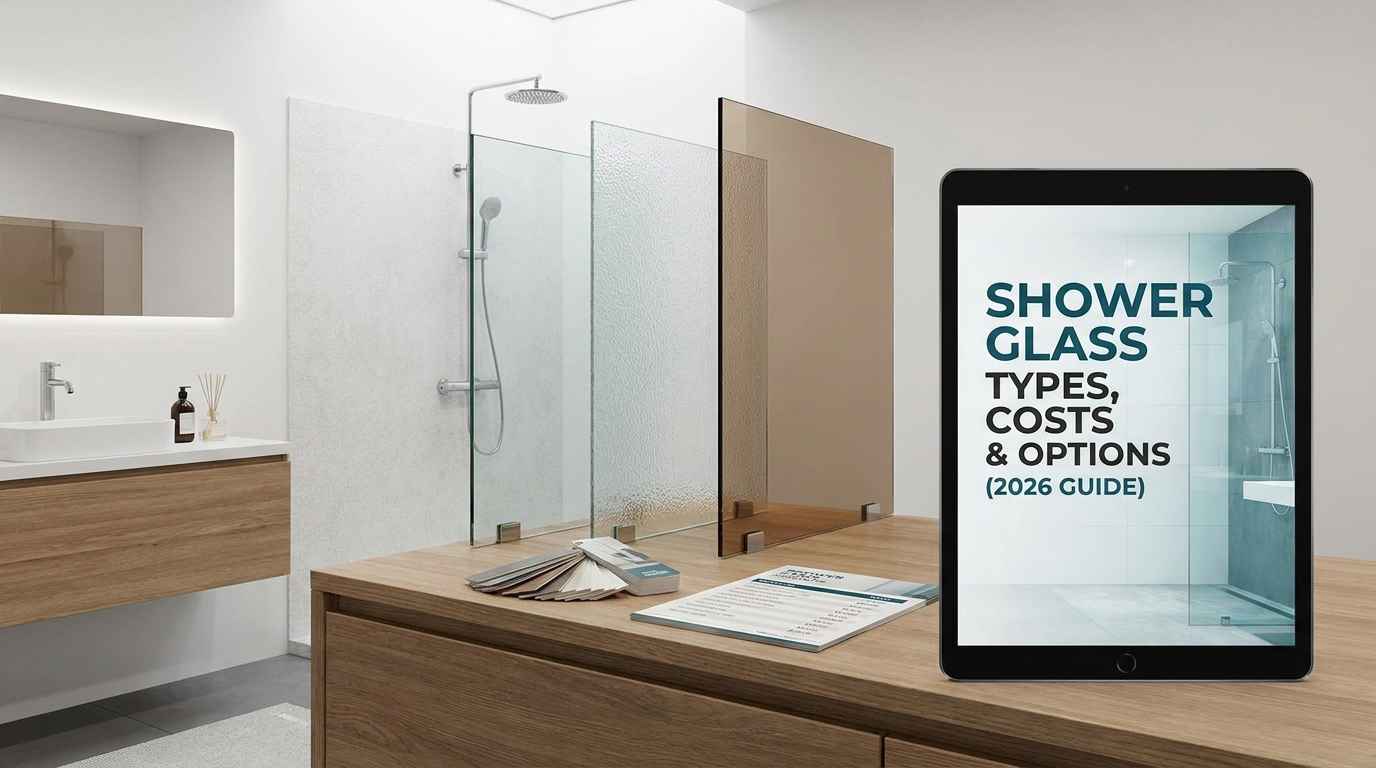
You’re standing in a showroom or scrolling a contractor’s website, and suddenly there are a dozen shower glass options — frameless, semi-frameless, tempered, frosted, low-iron, and more — with price differences that make no obvious sense. A standard 60-inch enclosure can run anywhere from $400 to over $4,000. The spec sheets don’t explain why.
This guide cuts through that noise. It explains the meaningful differences between glass types, why thickness and treatment matter far more than most buyers expect, what installation really costs in the U.S. in 2026, and the three decisions that most homeowners get wrong. By the end, you’ll know exactly what questions to ask — and which upgrade is actually worth paying for.
What “Shower Glass” Actually Means (And Why the Label Matters)
Shower glass is not a single product. It’s a category covering at least five distinct glass types, each with different safety profiles, aesthetic results, cleaning requirements, and price points. The term itself is a surface-level description — like calling all footwear “shoes.”
In the U.S., all shower enclosure glass sold commercially must comply with CPSC 16 CFR Part 1201 safety glazing standards, which require that the glass be tempered or laminated so it breaks into blunt pebbles rather than sharp shards. That’s the legal floor. Everything above it — glass thickness, coating, clarity, tint — is where real differences emerge.
The Five Types You’ll Actually Encounter
| Glass Type | Thickness | Typical Use | Price Range (Per Panel) | Best For |
|---|---|---|---|---|
| Standard Tempered | 3/8″ (10mm) | Framed & semi-frameless enclosures | $50–$120 | Budget builds, rentals |
| Heavy Tempered | 1/2″ (12mm) | Frameless enclosures | $120–$280 | Premium residential |
| Low-Iron (Starphire) | 3/8″–1/2″ | Frameless, luxury builds | $180–$400 | Design-forward projects |
| Frosted / Acid-Etched | 3/8″–1/2″ | Privacy enclosures | $90–$250 | Shared bathrooms, master baths |
| Patterned / Textured | 3/8″ | Decorative enclosures | $80–$200 | Style differentiation |
Note: prices above reflect glass panel material costs only, not installation. Verify current pricing with your supplier.
The Green Tint Problem Most Buyers Never See Coming
Standard tempered glass has a slight green tint. You won’t see it looking through a single pane, but stand the panel against a white tile wall and it becomes obvious — especially with panels thicker than 3/8 inch.
This is where low-iron glass earns its price premium. Brands like Vitro’s Starphire Ultra-Clear and Guardian’s UltraWhite are manufactured with reduced iron content, which eliminates the green cast entirely. The result is a panel that reads as genuinely clear — almost invisible against white or light gray tile.
The standard glass vs. low-iron decision is one of the most commonly skipped conversations at the point of sale. Many contractors default to standard unless asked directly. If your bathroom has white subway tile, marble, or any pale stone, ask about low-iron before signing anything.
Frameless vs. Semi-Frameless vs. Framed: What Actually Changes
The frame — or lack of one — affects three things: the minimum glass thickness required, the installation complexity, and the cleaning burden over time.
Framed Enclosures
Framed shower glass uses aluminum or metal channels to support the glass on all four sides, which means thinner (and cheaper) glass can be used. Cleaning the metal tracks is a real ongoing task. Soap scum accumulates in corners. If you’re outfitting a rental property or a secondary bathroom, framed is defensible. For a primary bath you’ll use daily, the long-term maintenance cost tends to offset the upfront savings.
Semi-Frameless
Semi-frameless designs support the glass at fixed points — typically the top, bottom, or one side — without full perimeter metal. This lets you use slightly thinner glass than a fully frameless system while still achieving a cleaner visual result than fully framed. For mid-range remodels, semi-frameless is often the best balance of cost and aesthetics.
Frameless Enclosures
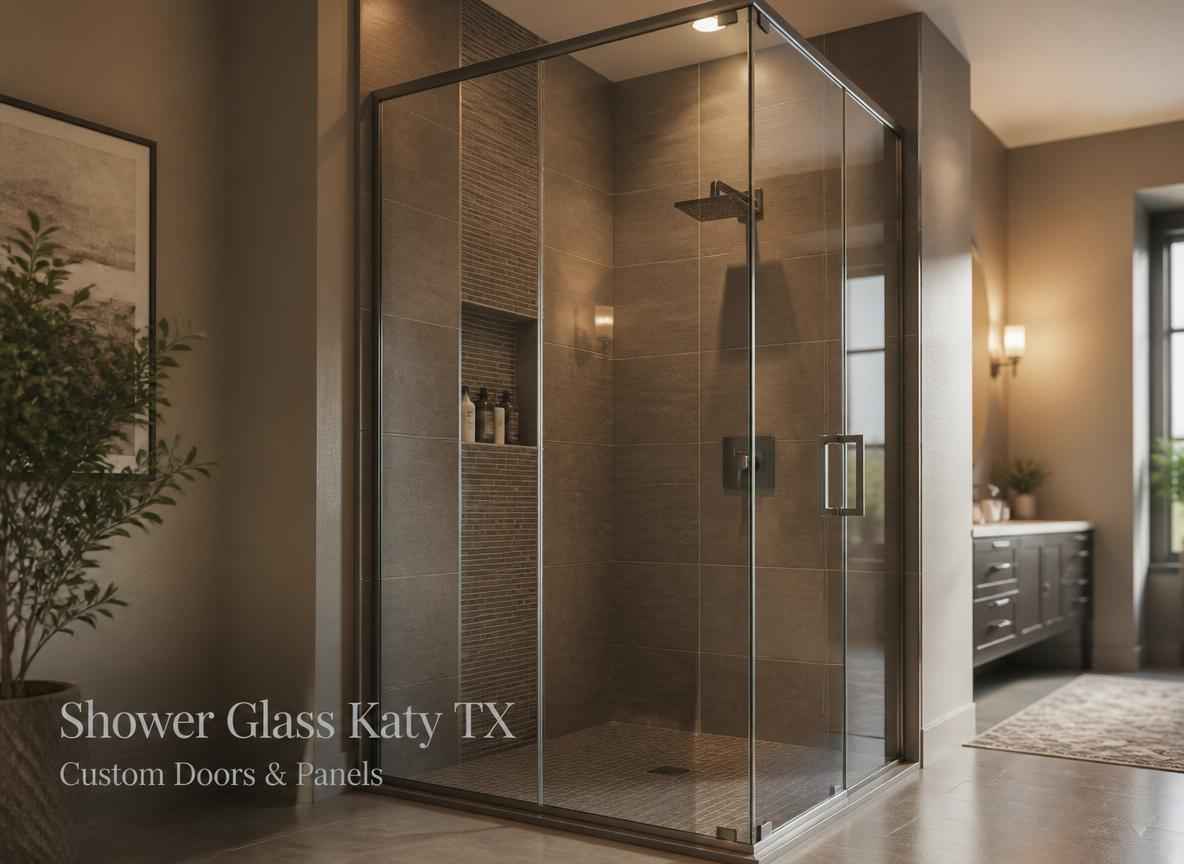
Frameless systems require heavy tempered glass — typically 1/2 inch — because the panels are self-supporting. The result is a floating, architectural look that photographs well and holds its value in a home resale context. Installation is more precise and less forgiving. A frameless door that’s out of level by even 1/8 inch will swing open or drift closed on its own. The hardware tolerances are real. Choose an installer with a verifiable frameless track record, not just general glass experience.
Frameless — Pros
- Minimal cleaning surfaces
- Long-lasting visual appeal
- Strong resale signal
- Accommodates custom sizing easily
Frameless — Cons
- Higher upfront cost
- Installation skill-dependent
- Water seal relies on quality sweeps
- Heavy glass — wall anchoring matters
Glass Coatings: Are They Worth the Upcharge?
Most glass suppliers now offer a hydrophobic coating option — often marketed as EasyClean, ClearShield, or DiamondFusion. The core premise: a nano-coating fills the microscopic pores in glass, causing water to bead and roll off rather than sheet across the surface. Mineral deposits and soap scum have fewer places to grip.
The honest trade-off is this: factory-applied coatings on new glass perform well for the first two to three years. After that, performance degrades, and reapplication (if the manufacturer supports it) costs between $80 and $200 per application depending on panel size and the product used.
Worth Knowing
As of 2025, DiamondFusion International updated its warranty terms to 10 years for professional installation on new glass — an improvement from the previous 5-year coverage. Verify current warranty terms directly with your installer or the DiamondFusion website before factoring this into your decision.
If your water supply has high mineral content (common in cities like Phoenix, Las Vegas, and parts of Texas), a quality coating will make a measurable difference in weekly cleaning time. In markets with soft water, the benefit is real but smaller. Know your water before paying the upcharge.
What Shower Glass Actually Costs to Install in the U.S. in 2026
The most common source of sticker shock is the gap between “glass cost” and “total installed cost.” Material is only one variable.
| Enclosure Type | Glass Material | Labor | Hardware | Estimated Total |
|---|---|---|---|---|
| Framed (standard) | $200–$400 | $250–$400 | Included | $450–$800 |
| Semi-Frameless | $350–$700 | $300–$550 | $80–$200 | $730–$1,450 |
| Frameless (standard tempered) | $500–$1,100 | $400–$700 | $150–$400 | $1,050–$2,200 |
| Frameless (low-iron) | $700–$1,600 | $450–$800 | $200–$500 | $1,350–$2,900 |
| Custom / Walk-In | $900–$3,000+ | $600–$1,200+ | $300–$800 | $1,800–$5,000+ |
Ranges reflect U.S. national averages for 2026. Labor costs vary significantly by region — expect a 20–40% premium in coastal metro markets (New York, San Francisco, Los Angeles). Verify current pricing with local installers.
The variables that inflate cost fastest: non-standard shower dimensions, heavy frameless glass in upper-floor bathrooms (structural wall assessment required), and same-day installation requests. Plan the timeline with at least two to three weeks for custom-cut panels.
The Buying Checklist: Before You Call a Contractor
Most homeowners call glass contractors before they’ve made the decisions that would let them get a real quote. These are the questions you need to answer first:
- What are the exact shower opening dimensions — width, height, and wall angle?
- Are the walls plumb and square, or will custom fitting be required?
- What’s the wall substrate — tile, stone, drywall — and is it reinforced for hardware anchoring?
- Do you want clear, frosted, or patterned glass? (Privacy needs drive this.)
- Is low-iron glass necessary given your tile or stone color?
- Do you want a hydrophobic coating, and are you in a hard-water area?
- What’s your swing clearance for a hinged door vs. a sliding or pivot system?
- What finish do you want for hardware (chrome, brushed nickel, matte black, brass)?
Walking into a contractor conversation with these answers will cut the quote process in half and prevent the most common change-order additions that inflate final costs.
The Decision Most People Get Right — Too Late
Shower glass is one of the few bathroom elements you interact with every single day and almost never think about replacing. That’s exactly why the upfront decision carries so much weight. The difference between standard tempered and low-iron glass costs maybe $300 on a mid-range install. The visual difference lasts 20 years.
For most primary bathrooms in the U.S. in 2026, the clearest value path is: frameless frameless construction, 1/2-inch tempered glass, low-iron if your tile is light, hydrophobic coating if you’re in a hard-water city. That combination isn’t the cheapest option — but it’s the one you won’t regret.
Your next step is straightforward: get at least three quotes from installers who specialize in frameless work (not general contractors who “do glass too”), share your measurements, and ask specifically whether they use low-iron glass as a standard or an upgrade. The answer will tell you a lot about who you’re working with.
Frequently Asked Questions
What thickness of shower glass is best for a frameless enclosure?
For frameless shower enclosures, 1/2-inch (12mm) tempered glass is the industry standard. It provides the structural rigidity needed to support panels without a metal frame. Some budget frameless systems use 3/8-inch glass, but these typically require more hardware support points and feel less solid. If you’re investing in a frameless design, don’t downgrade the glass thickness to save $100 — it undermines the entire point of the build.
Is frosted glass harder to clean than clear shower glass?
Acid-etched frosted glass has a slightly rougher surface texture than polished clear glass, which can make water spots and soap residue more visible over time — the opposite of what most buyers expect. The solution is a hydrophobic coating applied at installation. Frosted glass with a factory coating performs comparably to clear glass in terms of day-to-day cleaning, provided you squeegee after each shower.
How long does shower glass last?
Well-installed tempered shower glass has no functional lifespan limit — it doesn’t degrade or weaken with age under normal conditions. What ages out are the seals, sweeps, and hardware. Frameless door sweeps typically need replacement every 3–5 years. Caulk seals around fixed panels last 5–8 years before they should be inspected. The glass panels themselves should last the life of the home.
Can shower glass shatter on its own?
Spontaneous breakage of tempered glass is rare but real — it’s caused by nickel sulfide inclusions that can form during the manufacturing process. The industry term is spontaneous tempered glass breakage. Heat-soaking, a process where panels are exposed to elevated temperatures before installation, dramatically reduces this risk. For high-end frameless installs, ask your glass supplier whether they heat-soak their panels. Most quality suppliers do as a standard practice.
What’s the difference between low-iron glass and standard shower glass?
Standard float glass contains iron oxide, which gives it a subtle green tint that becomes more visible the thicker the panel. Low-iron glass — sold under brand names like Starphire by Vitro or UltraWhite by Guardian — is manufactured with reduced iron content, eliminating the green cast. For bathroom applications with white, gray, or light-colored tile, the clarity difference is immediately visible. Low-iron panels typically cost 30–60% more than standard tempered glass of equivalent thickness.
Do I need a permit to install shower glass?
In most U.S. jurisdictions, replacing or installing shower enclosure glass on an existing shower does not require a separate permit, provided structural work isn’t involved. However, if you’re reconfiguring the shower footprint, moving walls, or changing drainage, permit requirements apply. Always check with your local building department before starting, as requirements vary by city and county. A reputable installer will know local requirements and should be able to advise you directly.
How do I remove hard water stains from shower glass?
Hard water stains on shower glass are mineral deposits — primarily calcium and magnesium — that bond to the glass surface over time. A solution of white vinegar and water (1:1 ratio) applied with a non-abrasive pad removes fresh deposits effectively. For older, heavier buildup, products like Bar Keepers Friend or commercial calcium-lime-rust removers work faster. Avoid abrasive scrubbers on coated glass — they’ll damage the hydrophobic layer. Consistent squeegee use after each shower prevents the problem from forming in the first place.
What’s the best shower glass option for a small bathroom?
In a small bathroom, clear frameless glass is almost always the best visual choice because it avoids the visual boundaries that framed metal channels create, making the space read as larger. Frosted or patterned glass in a small bath can feel visually heavy. If budget limits you to a framed system, choose a frameless-look profile with thin satin or chrome trim rather than wide aluminum channels. Clear glass, even in a framed system, keeps the space feeling open.
How is a walk-in shower glass panel different from an enclosure?
A walk-in shower panel is typically a single fixed glass screen — not an enclosure — that creates a water barrier without a door. They require heavy glass (typically 1/2 inch) because there’s no frame for lateral support. They’re popular in contemporary master bath designs because they minimize hardware and maximize the open feel. The trade-off is splash containment: without side returns, water management depends on the showerhead angle and user behavior. They work well in larger shower footprints, less so in tight spaces.
How do I choose between a hinged and sliding shower door?
Hinged doors are the premium choice for frameless systems — they provide a cleaner seal, require less hardware, and have no track to clean. They need swing clearance of at least 24–30 inches outside the shower. Sliding bypass doors are better for bathrooms where that clearance doesn’t exist, particularly smaller footprints under 48 inches wide. Note that sliding doors require a track along the bottom or top that collects soap and mineral buildup — factor that into your cleaning preference before deciding.