The Walk-In Shower Tile Ideas Houston Homeowners Are Actually Installing in 2026
You’ve already bookmarked a dozen bathroom photos. You know what you like. The problem isn’t inspiration it’s figuring out which of those ideas will actually survive your daily schedule, your water pressure, and Houston’s notoriously hard tap water. A tile that photographs like a luxury resort can look gray and dingy within six months if it’s the wrong choice for your space.
At Your Dream Remodeling, we’ve built and tiled walk-in showers across Houston, Katy, Cypress, Richmond, Sugar Land, and Bellaire. We know what holds up and what doesn’t especially in a climate where humidity runs above 70% year-round and municipal water hardness in Harris County exceeds 300 mg/L. This guide gives you the complete picture: styles, formats, floor safety ratings, Houston-specific costs, and the tile mistakes we see in almost every DIY and budget-contractor install.
Why Tile Choice Is About More Than How It Looks
Most homeowners pick a tile because they love it in a photo. That’s a reasonable starting point. But the tile decisions that lead to regret are almost always about what the photo doesn’t show: the COF rating, the grout maintenance burden, or the substrate requirement that triples the labor cost.
Here’s what actually matters before you select any tile for a walk-in shower:
Wet COF rating on the floor. The ANSI A137.1 standard requires a minimum wet coefficient of friction (COF) of 0.42 for shower floor surfaces. Polished marble, smooth glazed ceramic, and most high-gloss tiles fall below this number. They look great. They’re also a liability in a curbless or zero-entry design where water spreads freely across the entire floor.
Grout type in a humid climate. Standard cement-based grout in a Houston shower without epoxy or consistent sealing will discolor, crack, and harbor mold within the first year. Hard water mineral deposits accelerate every form of grout degradation.
Substrate before tile. Standard drywall in a wet area is a building code violation in most Texas jurisdictions. The waterproof layer — whether it’s a sheet membrane like Schluter KERDI, a liquid-applied product like RedGard, or cement backer board — is what keeps moisture from reaching the wall framing. Getting this wrong doesn’t show up immediately. It shows up 18 months later as a $15,000 remediation bill.
At Your Dream Remodeling, every walk-in shower we build includes a properly installed waterproof membrane system. It’s not an upsell. It’s what makes the tile last.
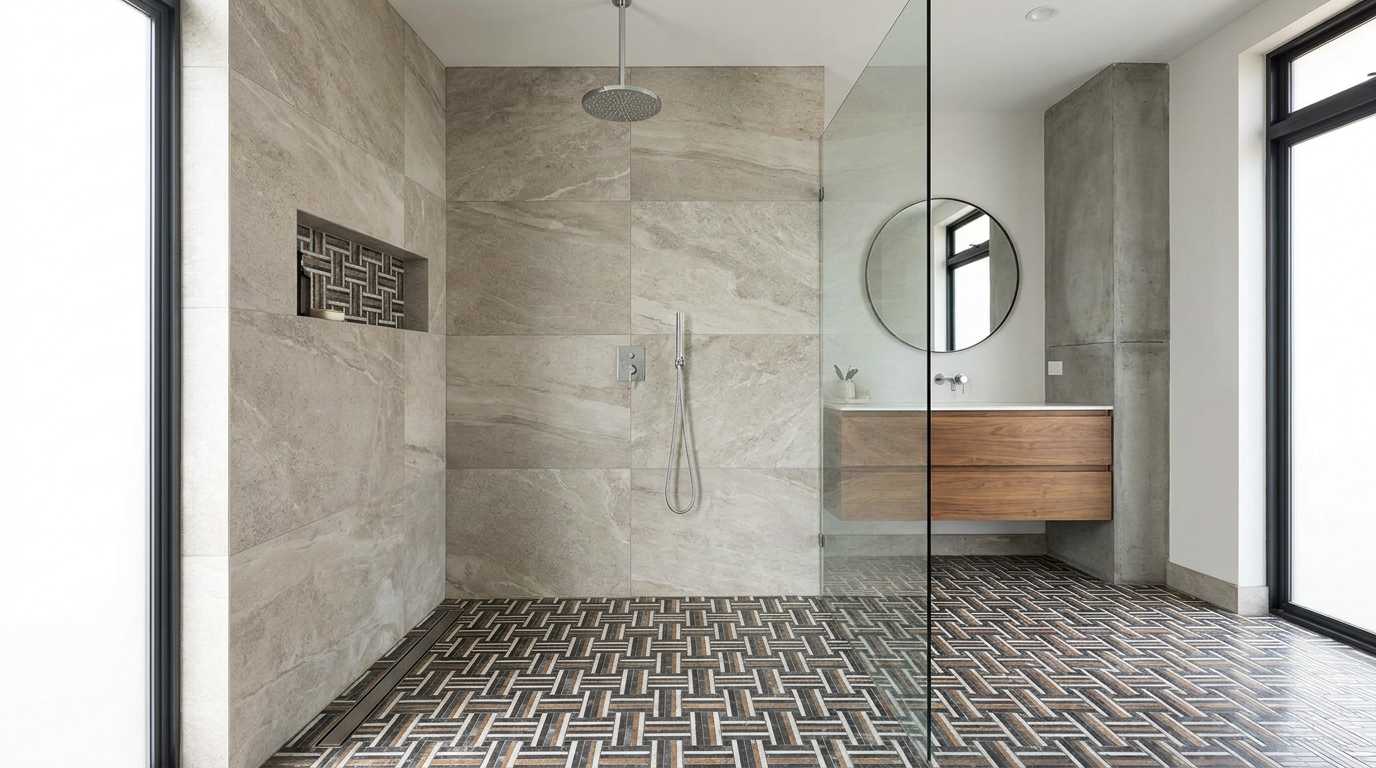
walk in shower tile ideas
Walk-In Shower Tile Ideas by Space Size
Tile selection isn’t one-size-fits-all. The format, pattern, and color approach that works beautifully in a 60-inch master shower can make a 32-inch guest bath feel like a closet. Match the tile to the footprint first.
Small Walk-In Shower Tile Ideas (Under 36 Inches Wide)
Tight showers punish visual complexity. Too many grout lines, too much pattern, or too many competing colors in a small enclosure makes the space feel busy and smaller than it actually is.
What works in small walk-in showers:
- Vertical-stacked 4×12 or 4×16 elongated tile on all walls. The vertical orientation draws the eye upward, adding perceived height without opening a single wall. This format is replacing the standard 3×6 subway in mid-range Houston installs precisely because it achieves the same clean look with fewer, bolder lines.
- 12×24 matte porcelain with matching grout. When grout color matches the tile, the grid nearly disappears. The surface reads as a continuous plane instead of a patterned wall. In a small shower, that’s a significant visual gain.
- 2-inch hex or small square mosaic on the floor only. Enough texture for grip (wet COF above 0.50 in most matte porcelain hex formats), and the small scale on the floor reads as intentional detail rather than visual clutter.
What to skip in small spaces: mosaic tile on every surface, dark tile with white grout (the grid dominates the space), and bold pattern tile on the walls (save it for larger rooms where it breathes).
Master Bathroom Walk-In Shower Tile Ideas (48×36 and Larger)
A proper master bath walk-in gives you room to differentiate surfaces without the design feeling scattered. The layout that consistently performs for larger Houston master bath builds:
| Surface | Recommended Format | Why It Waorks |
|---|---|---|
| Back feature wall | 24×48 or 24×24 matte porcelain, stacked | Focal point, fewer grout lines, spa-like finish |
| Side walls | 12×24 or 4×16 in a coordinating tone | Reduces visual competition with the feature wall |
| Floor | 2×2 hex or 3×3 textured mosaic | Grip rating above 0.50, defined boundary from walls |
| Niche | Zellige, handmade ceramic, or contrast stone-look | One accent moment without a full-wall commitment |
| Bench top | Same tile as floor, never the wall tile | Horizontal surface needs the same wet COF as the floor |
The niche is where most clients make their one bold choice. A different tile inside a recessed niche is low-risk, low-cost, and high-impact. It gives the shower a designed look without requiring a $40/sq ft material on every square inch.
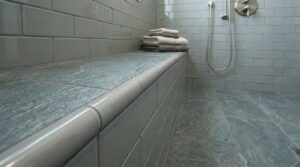
Walk-In Shower Floor Tile Ideas: Safety First, Then Style
The floor is the one surface where aesthetics must come second. This matters more in Houston than most markets because curbless walk-in showers — the most popular style in our builds across Katy and Cypress in 2026 — spread water across the full floor surface. There’s no curb to contain it.
2026 walk-in shower floor tile comparison:
| Tile Type | Wet COF | Maintenance | Installed Cost (Houston, 2026) |
|---|---|---|---|
| Textured porcelain mosaic (2×2) | 0.60 to 0.72 | Low | $18 to $30/sq ft |
| Honed slate or quartzite | 0.55 to 0.65 | Medium | $28 to $45/sq ft |
| Matte hex porcelain (1 to 2 inch) | 0.55 to 0.68 | Low to Medium | $20 to $32/sq ft |
| Pebble tile | 0.50 to 0.60 | High | $22 to $38/sq ft |
| Polished marble | 0.20 to 0.35 | Very High | $38 to $70/sq ft |
| Smooth glazed ceramic | 0.15 to 0.30 | Low | $10 to $18/sq ft |
Prices reflect 2026 Houston-area averages per Angi and USA Cabinet Store data. Confirm pricing with your contractor before purchasing — material costs vary by supplier and market conditions.
Polished marble and smooth glazed ceramic both fall below the ANSI 0.42 minimum. They look exceptional in showrooms. They’re unsafe in daily-use walk-in showers, especially curbless designs.
Pebble tile has decent grip but the highest maintenance burden in this category. Every indentation in the uneven surface collects soap residue, hard-water mineral deposits, and mold. In Houston’s climate, that’s a weekly battle. If you love the look, use pebble as a single accent strip rather than the full floor.
One detail most articles skip: in a curbless walk-in shower, the floor must slope toward the drain across the entire surface. That slope is built into the mortar bed, not the tile cuts. Large-format floor tiles make this engineering task harder. A linear drain solves it cleanly by reducing slope to one direction only, at an added cost of $400 to $900 depending on length and drain system.
Walk-In Shower Large Tile Ideas: Where It Works and Where It Fails
Large-format tile, anything 24×24 and above, is the dominant request for 2026 walk-in shower builds across Houston and the surrounding suburbs. The reasons are straightforward: fewer grout lines, a cleaner look, easier maintenance, and a spa-like surface continuity that smaller tiles can’t match.
The constraints are just as real.
Large tile works when the substrate is flat to within 1/8 inch (the TCNA standard for tiles over 15 inches on any side), a waterproof membrane is properly installed behind it, and every tile is back-buttered — meaning thinset is applied to both the wall and the back of the tile for full coverage. Skip the back-butter step to save time, and large tiles flex at the edges and eventually crack.
Large tile fails when it’s installed over builder-grade drywall in a wet area, when the mortar bed isn’t level (lippage on a 24×48 tile is visible from across the room), or when the project budget cut the waterproofing layer to reduce cost.
In Houston specifically, the combination of year-round humidity above 70% and hard water means any crack in a grout line or compromised membrane creates a moisture pocket that stays wet. Large tiles over a deficient waterproof layer create larger, harder-to-detect moisture damage. The damage doesn’t appear immediately. It appears when you’re replacing drywall and framing two years later.
Your Dream Remodeling installs waterproof membrane systems on every walk-in shower project, regardless of tile size. That step alone prevents the most common and most expensive shower failures we see in Houston-area bathrooms.
Walk-In Shower Tile Ideas With a Bench: The Surface Most People Tile Wrong
A built-in bench looks like a wall extension, so most homeowners (and some contractors) tile it the same as the walls. That’s a mistake with an 18-month expiration date.
The bench top is a horizontal surface that holds standing water, direct body weight, and soap residue every single day. It behaves exactly like the floor, not the walls. Polished or semi-polished wall tile on a bench surface will show grout cracking, staining, and surface wear within the first year of real use.
Getting the bench right:
- Use the same slip-rated, textured tile as the shower floor, with a wet COF of 0.42 or higher
- Slope the bench surface 1/8 inch per foot toward the drain so water doesn’t pool and sit
- Finish the front edge with bullnose or a coordinating trim tile — no raw tile cuts where someone sits
- Use epoxy grout on the bench top specifically, even if you used cement grout on the walls
- Apply sealer on installation and inspect the bench surface annually
The niche wall directly above the bench is the right location for a design moment. That vertical surface is where a 4×4 zellige tile, a 3×6 handmade ceramic in an unexpected color, or a contrasting stone-look mosaic reads beautifully. It’s contained, intentional, and adds character without requiring an expensive material on all four walls.
2026 Tile Styles Worth Installing in Houston (and One That Has Run Its Course)
What’s performing well in 2026 Houston walk-in shower builds:
| Style | Best Application | Notes |
|---|---|---|
| Fluted or reeded porcelain | Accent wall, niche | Texture catches light with minimal grout complexity |
| Zellige-look ceramic | Niche, bench back, feature wall | Color variation hides hard water spots and mineral haze |
| 24×48 matte porcelain | All walls; textured version for floors | Top performer across all Houston price points |
| Elongated subway 4×12 or 4×16 | All walls | Dominant in mid-range remodels across Katy and Cypress |
| Matte hex mosaic in earth tones | Floor only | COF above 0.55, warm palette matches 2026 color trends |
| Wood-look porcelain plank | Accent wall or ceiling | 100% waterproof, trending in coastal-contemporary Houston builds |
| Dark tile in charcoal, forest green, or navy | Feature wall or full enclosure | Growing fast in 2026; requires proper lighting plan |
The one that’s run its course: Standard 3×6 white subway tile. Not because it performs poorly — it doesn’t. Because it’s become so common in Houston bathroom renovations that it no longer reads as a considered choice. If you want the subway look, go to 4×12 minimum in a warm white or soft greige, with a grout color that’s deliberately matched rather than whatever was left over from the previous job. That’s a design choice. The 3×6 in white is a default.
Walk-In Shower Installation in Houston, Katy, Cypress, and Richmond: What Changes Here
National tile guides are written for an average US climate. Houston is not that. Three factors change the tile and installation decision in this market specifically.
Hard water above 300 mg/L. Parts of Harris County register calcium carbonate levels that visibly etch and cloud smooth tile surfaces within months of installation. This same hard water weakens cement-based grout bonds over time, accelerating the grout failures we regularly see in Houston showers that were installed without epoxy grout or sealing. A water softener helps at the home level. Epoxy grout and a squeegee habit solve the shower specifically.
Year-round humidity above 70%. Without a properly sized exhaust fan — the Home Ventilating Institute recommends 1 CFM per square foot of bathroom area — shower environments stay humid for hours after use. That sustained moisture is the direct cause of mold behind grout lines, tile staining, and structural damage to wall framing in poorly waterproofed installations. Houston tile contractors now include antimicrobial sealant as a standard step in shower builds for exactly this reason.
The local labor market. As of 2026, the Houston metro faces a documented shortage of licensed tile setters and plumbers. Licensed plumbers currently charge $85 to $175 per hour, up approximately 8 to 10% from 2025 levels. Inner Loop neighborhoods including Heights, Montrose, and Midtown run 15 to 20% higher than suburban Katy or Cypress projects due to access, parking, and city oversight complexity.
What a walk-in shower installation costs in the Houston area in 2026:
| Project Scope | Cost Range |
|---|---|
| Standard tiled walk-in shower, mid-range | $6,000 to $12,000 |
| Custom tile build with premium materials | $15,000 to $20,000+ |
| Curbless or zero-entry conversion (add 20 to 30%) | $8,000 to $16,000 |
| Waterproof membrane installation | $500 to $1,000 |
| Linear drain addition | $400 to $900 |
| Demolition and removal | $300 to $1,500 |
| Permits via Houston Permitting Center | $250 to $500 |
Per Angi’s April 2026 Houston data, the average walk-in shower installation runs $8,874 locally, with most projects landing between $5,916 and $11,832. Tub-to-shower conversions in Houston return 60 to 64% ROI on average, and homes with walk-in showers as the primary bath option sell for approximately 10% more than those with only tubs.
If you’re in Katy, Cypress, Richmond, or Sugar Land, request a line-item written quote before any work begins. Confirm that waterproofing, substrate prep, and mortar bed are included — or priced separately — before you sign anything. That’s where scope surprises live.
Your Dream Remodeling serves all of these areas and offers a free in-home consultation. Our designers can assess your specific bathroom layout, substrate condition, and water supply before making a single tile recommendation. Call us at 281-550-8900 or visit our Katy showroom to get started.
How to Choose Walk-In Shower Tile Without Second-Guessing It Later
Tile selection is a sequenced decision, not a single choice. Work through it in this order:
- Lock the floor tile first. COF rating, texture, and base color tone. Every other decision coordinates around this.
- Choose wall tile second, scaled to your space. Larger format for larger showers. Simpler pattern for smaller ones. Vertical orientation for low-ceiling rooms.
- Pick grout color third, not last. Matching grout makes tile pattern recede and the surface look continuous. Contrasting grout makes the pattern bold and graphic. Neither is wrong. Both must be intentional.
- Select one accent tile location. A niche, a bench back, or a single feature wall. One focused moment beats three competing ones every time.
- Confirm the substrate and waterproofing spec in writing before purchasing anything. In Houston, the membrane system is non-negotiable. If a contractor’s quote doesn’t include it, ask why.
Ready to move from planning to an actual installation plan? Our team at Your Dream Remodeling has completed hundreds of walk-in shower builds across Houston and the surrounding suburbs. We know what works in this climate, and we back every project with a one-year labor warranty. Schedule your free consultation at yourdreamremodeling.com or call 281-550-8900.
The Maintenance Reality Nobody Tells You Before You Commit
Large-format matte porcelain: wipe down weekly, re-caulk corners every two to three years. Lowest long-term maintenance in the category by a wide margin.
Natural stone (marble, travertine, quartzite): seal on installation, reseal every 6 to 12 months, use only pH-neutral cleaners. Acidic shampoos and body washes etch polished surfaces. In Houston’s hard water, expect visible mineral haze within the first year without a consistent sealing routine.
Zellige and handmade ceramic: surprisingly low maintenance. The varied glaze and naturally imperfect surface texture hides water spots and mineral deposits far better than smooth, uniform finishes.
Pebble tile: highest maintenance in this category. Every stone indentation collects soap, minerals, and mold. Budget for professional cleaning every 6 to 12 months or commit to a rigorous personal routine.
Epoxy grout on any tile: effectively zero maintenance beyond regular cleaning. No sealing required. In Houston bathrooms, the 20 to 30% premium over cement-based grout pays for itself within the first two years of use. It’s the right call every time.
Wrapping Up: The Tile Is the Finish. The Installation Is the Foundation.
The best tile installed on a deficient waterproof substrate will fail. A mid-range porcelain installed correctly over a proper membrane, with epoxy grout and the right slope, will still look sharp a decade later.
For most Houston-area walk-in showers — whether it’s a master bath in Katy, a guest suite in Cypress, or a full bath conversion in Richmond — the combination that delivers the best long-term value is large-format matte porcelain on the walls, textured matte mosaic on the floor, epoxy grout throughout, one deliberate accent tile in the niche, and a correctly installed waterproof membrane behind everything.
That’s not the flashiest answer. It’s the one that holds up.
If you’re ready to go from inspiration to a real plan, Your Dream Remodeling offers free in-home consultations across Houston, Katy, Cypress, Richmond, Sugar Land, Missouri City, and Bellaire. Our team will walk your bathroom, assess your substrate, and give you a straight answer about what works for your specific space and budget. Visit yourdreamremodeling.com or call 281-550-8900 to schedule yours.
The tile makes it beautiful. The installation makes it last. Get both right.
Frequently Asked Questions
What’s the best walk-in shower tile for Houston homes in 2026? Large-format matte porcelain is the strongest performer. It resists Houston’s hard water buildup, requires minimal maintenance, and holds up well in high-humidity conditions. For floors, choose a textured version with a wet COF rating above 0.50. For walls, 24×48 or 24×24 stacked panels give a clean, spa-like look with fewer grout lines to maintain.
What size tile works best for a small walk-in shower? A 4×12 or 12×24 on the walls with a 2-inch hex mosaic on the floor. Larger wall tiles mean fewer grout lines, which opens up tight spaces visually. Avoid small mosaic on every surface — it makes compact showers feel even more cramped.
Does large-format tile work in a walk-in shower? Yes, but only with proper prep. The substrate must be flat to within 1/8 inch, every tile must be back-buttered with thinset, and a waterproof backer board or membrane must be installed behind the tile. Any unevenness shows dramatically at this scale. Professional installation is essential.
What tile should go on a walk-in shower bench? Use your floor tile on the bench top, not the wall tile. The bench surface holds water and weight daily, so it needs the same wet COF rating as the floor (0.42 minimum per ANSI A137.1). Finish the front edge with bullnose trim and use epoxy grout on the bench top specifically.
How much does walk-in shower tile installation cost in Houston? Per Angi’s April 2026 data, the Houston average is $8,874, with most projects falling between $5,916 and $11,832. Custom tile builds reach $15,000 to $20,000. Always get a line-item quote and confirm that waterproofing and substrate prep are included. Contact Your Dream Remodeling for a free estimate.
What grout type holds up best in Houston bathrooms? Epoxy grout. It doesn’t absorb water, resists mineral staining from hard water, and never needs sealing. It costs 20 to 30% more upfront than cement-based grout but significantly reduces long-term maintenance. In Houston’s humidity and hard water environment, it’s the only grout we recommend for shower interiors.
Is a curbless walk-in shower worth it in Houston? Absolutely. Curbless showers are the most popular walk-in shower style in our 2026 builds across Katy, Cypress, and Sugar Land. They require additional subfloor work (add 20 to 30% to project cost) and a properly sloped mortar bed, but they’re safer, easier to clean, and have strong resale appeal in the Houston market.
What tile colors are trending for Houston walk-in showers in 2026? Warm earth tones — soft beige, taupe, clay, and warm greige — are the dominant palette in 2026, replacing the cool gray dominance of 2021 to 2024. Dark moody tiles in charcoal, forest green, and navy are gaining traction for feature walls. Warmer neutrals also have a practical advantage here: they hide mineral haze and hard water spotting far better than cool whites.
Do I need a permit for a walk-in shower install in Houston? In most cases, yes. A plumbing permit is required when modifying or moving plumbing lines. Structural permits may apply if walls are relocated. Apply through the Houston Permitting Center. Build $250 to $500 into your project budget for permits and make sure your contractor pulls them — skipping permits creates problems at resale.
How long does properly installed walk-in shower tile last? Porcelain or ceramic with a proper waterproof substrate and epoxy grout lasts 20 to 30 years in residential use. The primary failure points are grout deterioration, caulk breakdown at corners and transitions, and moisture behind poorly waterproofed walls. In Houston’s climate, all three risks are accelerated — which is exactly why substrate and grout selection matter more here than in drier parts of the country.