You keep seeing the phrase “European cabinets” on remodeling websites, in showrooms, maybe from a contractor who threw it out like you already knew what it meant. You probably have a rough sense of it, clean lines, no visible hinges, very modern. But you’re not sure if the difference is real or just a style label someone invented to charge more.
It’s real. European style cabinets are built differently, function differently, and cost differently from traditional American cabinets. Getting that distinction wrong before a remodel costs money and causes regret. This guide breaks down exactly what separates European frameless cabinets from everything else, which hinge systems actually matter, what the 2026 Houston market looks like for pricing, and when this style genuinely works for your home versus when it doesn’t.
What “European Style” Actually Means in Cabinet Construction
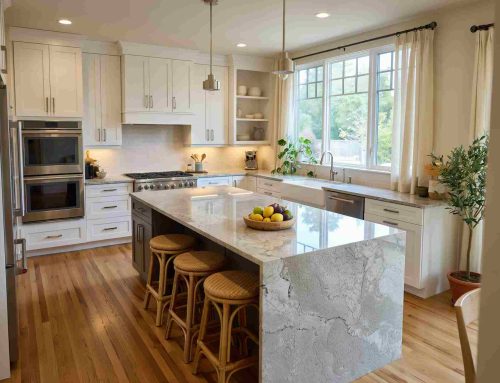
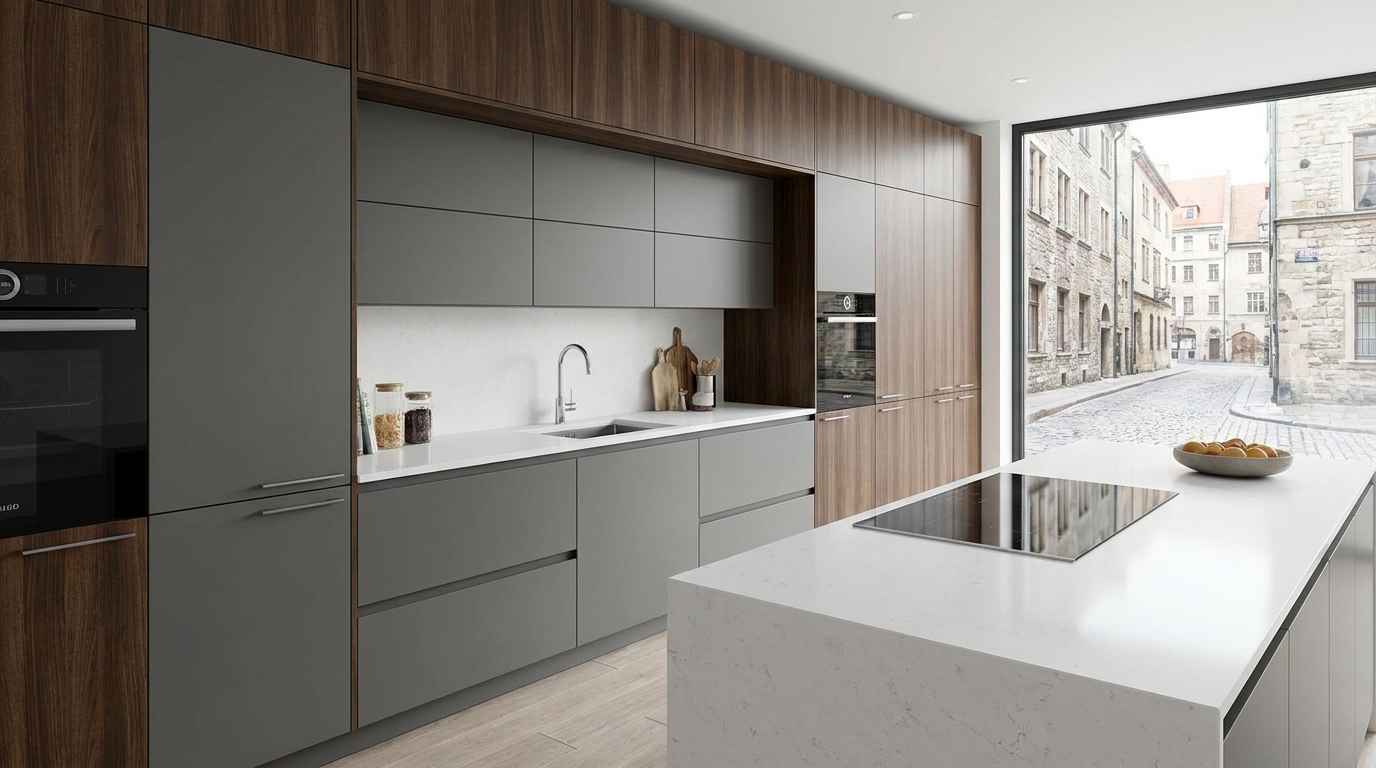
The defining feature of European style cabinets is frameless construction. That single word explains most of what you’re seeing in those clean, modern kitchens that look like the doors go all the way to the wall.
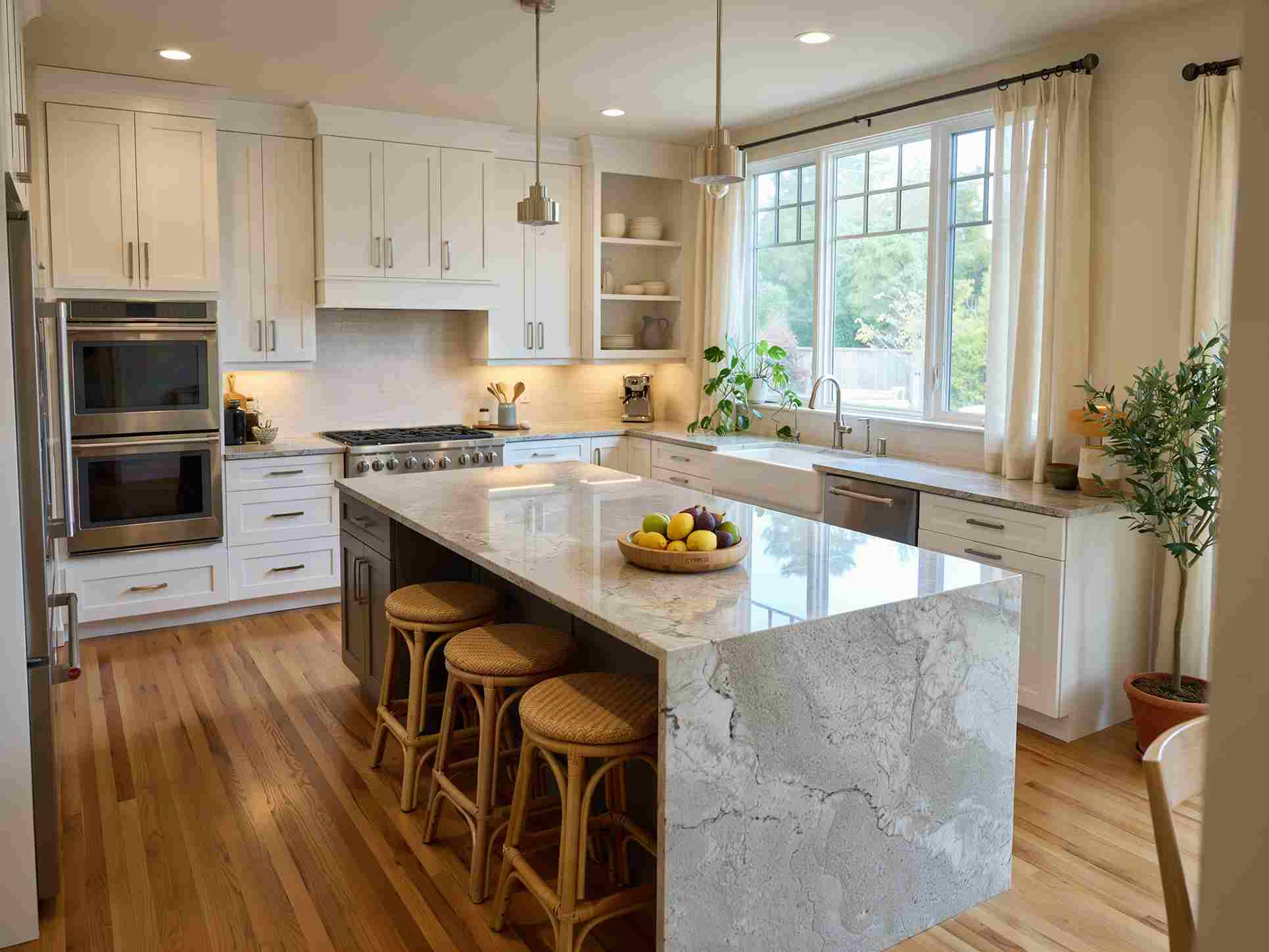
Traditional American cabinets have a face frame: a wood border glued and nailed to the front of the cabinet box. That frame gives the cabinet structural rigidity and a classic look, but it also narrows the opening and adds visible wood between doors. European frameless cabinets skip the frame entirely. The door attaches directly to the box sides using concealed hinges, covering nearly the full front face of the cabinet. The result is a thin, consistent gap between doors and a flat, continuous surface across the whole kitchen.
That consistent gap is actually intentional design. In a well-installed European kitchen, you’re looking at a rhythm of even reveals across every door and drawer, with no wood borders competing for attention. It reads as architectural, not decorative.
This construction style originated in post-World War II Germany and Italy, where manufacturing efficiency drove furniture makers toward box-based systems with concealed hardware. By the 1970s, it had become the standard across Europe. American kitchens stuck with face-frame construction much longer, but frameless cabinetry has been the dominant choice in high-end US remodels for well over a decade. In Houston’s newer master-planned communities like Bridgeland and Firethorne in Katy, frameless European cabinetry is now standard in homes above the $450,000 range.
Face Frame vs. Frameless: The Comparison That Actually Matters
Most articles mention this difference in passing. Here it is with the context that actually helps you decide.
| Feature | Face Frame (Traditional American) | Frameless (European Style) |
|---|---|---|
| Front structure | Wood frame borders the cabinet box | No frame, door attaches to box directly |
| Door overlay | Partial or inset | Full overlay, nearly covers entire face |
| Interior access | Frame narrows opening by 1 to 2 inches | Full box width accessible |
| Hinge type | Surface mount or concealed cup hinge | Concealed European cup hinge only |
| Visual style | Traditional, raised panel, farmhouse, shaker | Modern, flat, transitional, minimalist |
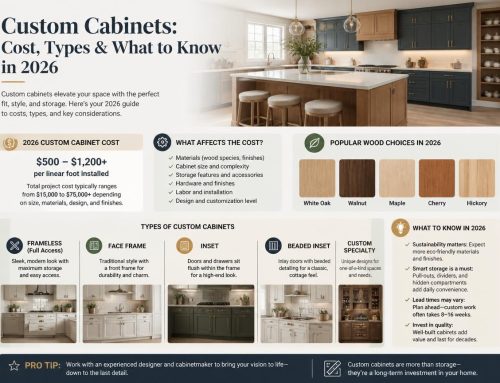
| Installed cost | $150 to $350 per linear foot | $200 to $450 per linear foot |
| Installation tolerance | Forgiving, frame hides minor gaps and imperfections | Demanding, walls must be close to level |
That last row is the one contractors rarely explain upfront. Frameless cabinets have no face frame to hide imperfections. If your walls are out of plumb, you’ll see it in uneven door gaps. Older Houston homes, particularly those built before 1990 in Bellaire, Meyerland, and older Katy neighborhoods, often have walls that have shifted or settled over the decades. A skilled installer handles this with filler strips and scribe molding. An unskilled one leaves you with a kitchen that looks slightly off and drives you crazy every morning.
The practical interior-access advantage is real but modest. About 10 to 15 percent more usable width per cabinet opening. For most kitchens, that’s a design preference, not a storage game-changer. The bigger reason to choose European style is the look.
European Cabinet Hinges: The Hardware Most Buyers Completely Ignore
Hinges aren’t glamorous. But the hinge system is what makes European style cabinets work the way they do, and choosing the wrong type or quality level affects both performance and longevity.
European cabinet hinges, also called concealed hinges or cup hinges, sit inside a circular cup drilled into the back of the door. The hinge clips onto a mounting plate inside the cabinet box. When the door closes, the entire mechanism disappears. No visible screws, no decorative hardware, nothing on the surface. That’s the European aesthetic applied to function.
Blum and Grass are the two most specified brands in professional kitchen installations across the US market. Blum’s BLUMOTION series and Grass’s TIOMOS line both incorporate soft-close action directly into the hinge mechanism, which is now the baseline expectation for any kitchen remodel above the entry level. Soft-close isn’t a luxury add-on in 2026; it’s what buyers expect when they open a cabinet door.
Five Things to Check Before Approving Your Hinge Spec
- Opening angle. Standard European hinges open to 110 degrees. Corner cabinets, pantry pull-outs, and appliance garages often need 165 or 170 degree hinges to provide full access. Confirm this with your installer before cabinets are ordered.
- Overlay type. Full overlay hinges are correct for true European frameless cabinets. Half overlay and inset hinges are for face-frame applications. This is a basic spec detail but it gets mixed up on orders more often than it should.
- Clip release system. Blum’s CLIP top and similar systems from Grass let you remove and reattach doors by pressing a release lever, no tools needed. This matters during installation adjustments and years later if you need to repaint a door or fix an issue.
- Soft-close mechanism. Built-in soft-close, where the damper is integrated into the hinge body, is cleaner and more reliable than stick-on dampers added after the fact. If your quote includes add-on dampers, ask why.
- Weight rating. Standard hinges handle cabinet doors up to about 22 pounds. Glass doors, thick solid wood doors, or oversized shaker panels can exceed that. Heavy-duty hinges rated for 30 pounds or more are not significantly more expensive but matter for long-term performance.
Here’s what almost no one mentions during a remodel consultation: European hinges adjust in three directions after installation. Depth adjustment moves the door in or out from the cabinet face. Lateral adjustment moves it left or right. Vertical adjustment moves it up or down. All three happen with a Phillips screwdriver while the door is hanging. If a door looks slightly crooked a month after installation, that’s not a defect requiring a contractor visit. It’s a two-minute adjustment you can do yourself.
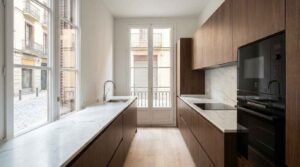
What Modern European Kitchen Cabinets Look Like in Houston Right Now
Design cycles in the Houston market shifted noticeably between 2023 and 2026. The all-white kitchen that dominated local showrooms and Houzz boards from roughly 2016 through 2022 is giving way to something warmer and more layered.
European white kitchen cabinets haven’t disappeared. They’re still a strong choice, especially in smaller kitchens where light reflection matters. But they’re increasingly being used on uppers only, paired with natural wood veneer or warm greige lower cabinets and a contrasting island. The two-tone approach lets homeowners get the clean European aesthetic while adding material depth that reads as more intentional in 2026.
According to the National Kitchen and Bath Association’s 2025 Design Trends Report, frameless cabinetry now represents 41 percent of all cabinet specifications in new kitchen remodels nationally, up from 33 percent in 2022. That shift is visible in Katy and Cypress new construction, where builders who used face-frame stock cabinets as the default five years ago are now specifying frameless semi-custom as the standard offering.
What’s appearing consistently in current Houston showrooms and completed projects:
- Slab door fronts in matte lacquer or thermofoil, replacing shaker as the most-requested profile in modern builds
- Integrated handles, where a routed groove in the door replaces visible pulls entirely
- Warm greige and soft taupe on upper cabinets, replacing stark bright whites
- White oak or walnut veneer on lower cabinets and islands for material contrast
- High-gloss acrylic doors on uppers in more contemporary or urban-influenced builds
The handleless European kitchen deserves specific mention. Push-to-open systems like Blum’s TIP-ON eliminate external hardware entirely. The cabinet surface is flat, fingerprint-resistant finish from wall to wall. It’s easier to clean, visually quieter, and particularly practical in households with young children where cabinet pulls create snag points at head height. In the Houston market, this approach is showing up in higher-end Cypress and Katy remodels where the design brief calls for a truly seamless look.
European Cabinets Wholesale vs. Retail: How the Buying Channels Actually Work
If you searched “European kitchen cabinets wholesale,” you were probably hoping to cut out the middleman and save significantly on your remodel. The honest answer is that it depends on your situation, and for most homeowners doing a single kitchen, wholesale isn’t actually accessible.
Wholesale cabinet suppliers require contractor accounts, proof of a business license, and often minimum order quantities that make no sense for one kitchen. The pricing advantage is real, typically 30 to 50 percent below retail MSRP for the same semi-custom frameless product. But that pricing exists because the supplier is selling at volume to professionals who bring repeat business.
When you work with an established remodeling company like Your Dream Remodeling, you access that supply chain indirectly. The contractor’s supplier relationships mean you’re getting product at a cost that reflects their volume purchasing, not the retail markup you’d pay buying directly from a showroom or home improvement store. That’s one of the genuine financial arguments for using a full-service remodeler rather than managing the purchase yourself.
The distinction between buying channels goes beyond price:
| Buying Channel | Price Range | Lead Time | Customization | Best Fit |
|---|---|---|---|---|
| Online RTA (IKEA SEKTION, Cabinets.com) | $100 to $200 per cabinet | 1 to 3 weeks | None | Tight budgets, DIY installs |
| Big box retail (Home Depot stock) | $150 to $300 per cabinet | Stock or 2 to 4 weeks | Very limited | Rental updates, quick flips |
| Local dealer or remodeler | $300 to $600 per cabinet | 6 to 10 weeks | Semi-custom sizing and finishes | Full kitchen remodels |
| Full custom cabinet shop | $800 to $2,000 per cabinet | 10 to 16 weeks | Fully custom dimensions and species | Luxury builds |
Cabinet prices vary by market and supplier. Verify current pricing with your contractor before budgeting.
The lead time column matters more than most buyers realize at the start of a project. A 10-week cabinet lead time means your kitchen is offline for at least two and a half months before cabinets even arrive. Plan the full project timeline, not just the installation window.
Is European Style Right for Your Home? An Honest Assessment
Not every kitchen and not every home is a good fit for European frameless cabinets. This is the part most remodeling content avoids because it might talk you out of an upgrade. But getting this wrong is expensive.
European style cabinets make strong sense when:
Your home is newer construction, meaning post-1995 in the Houston area, where walls were built to tighter tolerances and are likely still close to plumb. You want a modern or transitional look and are committed to it for the next decade, not chasing a trend you might want to undo in five years. Your kitchen layout is compact and you want every inch of interior cabinet width. You’re pairing cabinets with integrated appliances or panel-ready refrigeration, which looks dramatically better with frameless construction than with face-frame borders showing around the panels.
The European style works against you when:
Your home was built before 1990 and the walls have significant movement or settling. Frameless cabinets can still be installed in these kitchens, but the labor cost is higher and the result depends heavily on the installer’s skill level. If you have a tight budget for installation, this is a risk. You prefer a traditional, farmhouse, or cottage aesthetic. Shaker cabinets exist in both face-frame and frameless versions, but the deeply traditional raised-panel look is inherently a face-frame design. Forcing frameless construction into a traditional kitchen creates a visual conflict. Your total kitchen remodel budget is under $20,000. At that price point, quality European frameless semi-custom cabinets are hard to source and install properly. Entry-level RTA frameless cabinets are available, but the result often looks like what it is.
One scenario worth naming directly, because it comes up often in the Houston inner-loop and older suburban markets: an older home in Bellaire or Meyerland where the homeowner wants a modern European kitchen but the underlying structure makes it genuinely difficult. A good contractor will tell you when the prep work required to level walls and install frameless properly adds $3,000 to $5,000 to the project. That’s not a reason not to do it. It’s a reason to know about it before you sign a contract.
Finding European Style Kitchen Cabinets Near You in Katy, Cypress, and Houston
“European style kitchen cabinets near me” is a search that usually means one of two things. Either you want to see physical samples before committing, which is completely reasonable, or you want to find a local contractor who actually knows how to install frameless cabinetry properly, which is the more important question.
Seeing samples in person matters for European cabinets more than for traditional cabinets, because the quality differences are visible in the door gaps, the hinge action, and the finish consistency. An online photo can make a $120 RTA cabinet look identical to a $600 semi-custom one. The difference shows up when you open and close doors fifty times.
Your Dream Remodeling operates from their showroom at 1718 N Fry Rd, Suite 330, Houston, TX 77084, within easy reach of Katy, Cypress, and the west Houston corridor. The showroom lets you see cabinet lines in person, understand finish options side by side, and work through a design with a consultant who knows the local market. Free consultations are available, and bringing measurements and reference photos makes that first conversation significantly more productive.
Before your first appointment, run through this quick audit:
- Measure your kitchen’s linear footage of upper and lower cabinets
- Use a 4-foot level against your longest wall and note how far off plumb it reads
- Decide your door style: slab, shaker, or raised panel
- Have a rough sense of your full project budget, cabinets, countertops, and labor combined
- Bring photos of kitchens you like, including ones that show the gap reveals between doors
That last point, the gap reveals, tells a designer immediately whether you’re drawn to true European frameless or a hybrid shaker approach. It saves thirty minutes of conversation.
What a European Cabinet Remodel Realistically Costs in Houston in 2026
Here’s the realistic cost picture for a mid-range European frameless kitchen remodel in the Houston metro, based on a kitchen with approximately 180 linear feet of upper and lower cabinets.
| Cost Component | Estimated Range |
|---|---|
| Semi-custom frameless cabinets | $12,000 to $22,000 |
| European hinges and soft-close drawer hardware | $800 to $2,500 |
| Quartz countertops | $5,000 to $12,000 |
| Professional installation labor | $4,000 to $9,000 |
| Demolition and site preparation | $1,500 to $3,500 |
| Total mid-range full kitchen | $23,000 to $49,000 |
These numbers reflect 2026 Houston metro pricing. Material costs across the cabinet category increased 8 to 12 percent compared to 2023 levels, driven by ongoing supply chain adjustments and tariff-related pricing on imported cabinet components, particularly hardware sourced from European manufacturers. Budget accordingly and get quotes from at least two contractors before locking in a number.
The wide range in that total isn’t vague, it reflects real variables: kitchen size, cabinet line quality, whether you’re doing a layout reconfiguration or a straight cabinet swap, and whether your existing plumbing and electrical require relocation. A contractor who quotes $23,000 and one who quotes $44,000 for the same kitchen might both be right for very different project scopes.
Always verify current pricing directly with your supplier or contractor. Numbers above are estimates and market conditions change.
Conclusion
European cabinets are a construction method with real functional and aesthetic consequences, not a style label applied to anything with clean lines. Frameless construction gives you more interior access, a cleaner visual, and hardware that’s adjustable without professional help. In Houston’s Katy, Cypress, and Richmond markets, it’s become the standard for mid-range and above kitchen remodels precisely because it holds its value and its visual appeal over time.
The right call depends on your home’s age, your walls’ condition, your aesthetic goals, and your budget for quality installation. Most homeowners in newer Houston construction are well-served by European frameless cabinetry. Homeowners in older homes need an installer who’s done this work in imperfect conditions and will tell you the honest labor cost upfront.
Your Dream Remodeling serves the greater Houston area including Katy, Cypress, and Richmond with free in-home consultations and a working showroom where you can see and touch cabinet options before committing to anything. If you’re in the planning stage, that’s the most useful next step: get into a showroom, see what frameless cabinetry actually looks and feels like at different price points, and ask the questions this guide raised.
The kitchen that looks effortless took someone making the right decisions early. Start there.
FAQ SECTION (People Also Ask)
Q: What is the difference between European cabinets and regular cabinets? European cabinets are frameless, meaning there’s no wood border on the cabinet front. Traditional American cabinets have a face frame. Frameless cabinets use concealed hinges, offer full-overlay doors, and give you slightly more interior access. The look is cleaner and more modern. Face-frame cabinets suit traditional or farmhouse aesthetics and are more forgiving in older homes with imperfect walls.
Q: Are European style cabinets more expensive than traditional cabinets? Yes, typically 15 to 30 percent more when professionally installed. Semi-custom frameless cabinets in Houston run $300 to $600 per unit installed, compared to $150 to $350 for mid-range face-frame options. The premium reflects tighter manufacturing tolerances, concealed hinge hardware, and more demanding installation requirements. Entry-level RTA frameless options exist at lower price points but with significant quality trade-offs.
Q: What hinges do European cabinets use? European cabinets use concealed cup hinges, most commonly from Blum or Grass. The hinge sits inside a drilled cup in the door back and clips onto a mounting plate inside the cabinet box. It’s completely invisible when the door is closed. Quality European hinges include soft-close action and adjust in three directions after installation using a standard Phillips screwdriver.
Q: Can European cabinets work in an older home? Yes, with the right installer and proper prep. Older Houston homes often have walls that are out of plumb due to settling. Frameless cabinets require level installation to keep door gaps even. A skilled contractor uses filler strips and scribe molding to compensate. This adds labor cost, often $2,000 to $5,000 depending on how far off plumb the walls are. Get that detail in writing before signing.
Q: What are European white kitchen cabinets? White European kitchen cabinets are frameless cabinets with a white finish, typically lacquer, thermofoil, or painted MDF. They were the dominant kitchen style from 2016 through 2022. In 2026, they remain popular but are often used on upper cabinets only, paired with warm wood tones or greige lowers for a two-tone look that feels more current.
Q: Where can I find European style kitchen cabinets near me in Houston? Your Dream Remodeling at 1718 N Fry Rd, Suite 330, Houston TX 77084 carries European style frameless cabinet lines and offers free consultations. They serve Katy, Cypress, Richmond, and the greater Houston area. For in-person viewing before committing to a product or contractor, seeing physical samples in a showroom is strongly recommended over ordering online.
Q: What does frameless mean in European cabinetry? Frameless means the cabinet box has no wood border attached to the front. The door attaches directly to the box sides and covers nearly the entire face of the cabinet. This creates the clean, flush look associated with European style kitchens. The aesthetic result is a continuous surface with thin, even gaps between doors rather than visible wood frames separating them.
Q: Are IKEA kitchen cabinets the same as European cabinets? IKEA’s SEKTION system is technically frameless construction, but it differs significantly from what professionals mean by European cabinets. SEKTION comes in fixed module sizes with limited finish options and basic hardware. Semi-custom European frameless cabinets from professional suppliers offer custom widths, higher-quality box materials, more finish options, and better long-term hardware performance. IKEA works for budget kitchens; it’s not a substitute for professional European cabinetry.
Q: How do I adjust European cabinet hinges after installation? European cup hinges have three adjustment screws. The depth screw moves the door in or out relative to the cabinet face. The lateral screw moves it left or right. The vertical screw adjusts height. Use a Phillips screwdriver, adjust one screw slightly, close the door to check the gap, and repeat. You can level and align doors yourself without removing them or calling a contractor.
Q: How long do European style cabinets last? Quality European frameless cabinets built with plywood boxes typically last 20 to 30 years with normal use. Longevity depends more on box material than construction style. Plywood boxes are significantly more moisture-resistant than particleboard, which matters in Houston’s humidity. Hinge quality also affects lifespan. Blum and Grass hinges are rated for 100,000 open-close cycles, which far exceeds typical household use over any reasonable cabinet lifetime.