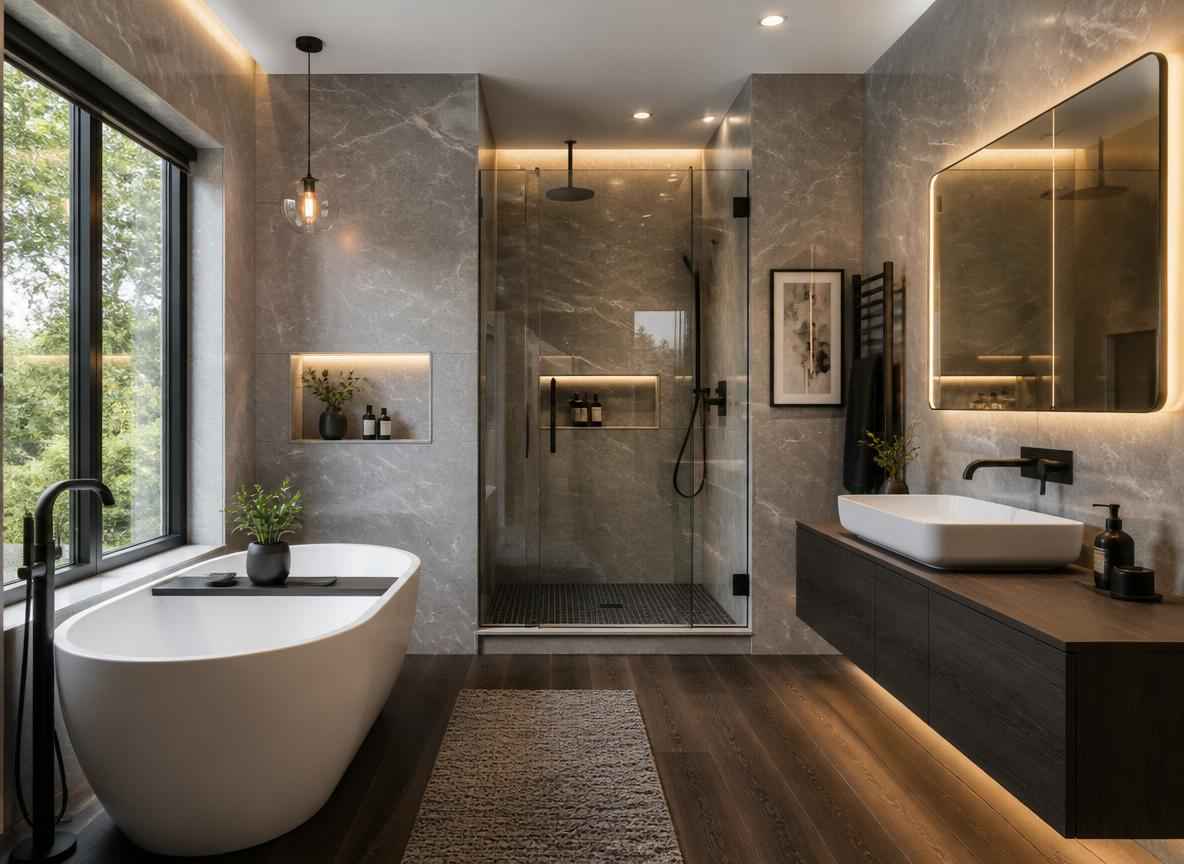
You’ve been living with a dated bathroom for two years too long. You’ve gotten a couple of quotes that vary by $15,000, you don’t know who to trust, and you’re not sure whether you need a general contractor or a specialist. That’s exactly where most Houston homeowners get stuck—not for lack of options, but because the information out there is either vague, outdated, or written to sell you something.
Here’s a clear-eyed breakdown of what a bathroom remodel in Houston actually costs in 2026, what separates a solid contractor from a problem one, and how to plan a project that doesn’t blow up your budget or your timeline.
What Does a Bathroom Remodel in Houston Actually Cost?
The honest answer: anywhere from $6,000 to $65,000+, depending on scope, finishes, and who you hire. But that range is useless without context.
| Project Type | Typical Houston Cost Range | What’s Usually Included |
|---|---|---|
| Cosmetic refresh | $4,000 – $8,000 | Paint, fixtures, lighting, hardware swap |
| Mid-range full remodel | $12,000 – $25,000 | New tile, vanity, tub/shower, plumbing rough-in |
| High-end master bath | $28,000 – $65,000+ | Custom tile work, steam shower, heated floors, luxury fixtures |
| Accessibility conversion | $8,000 – $20,000 | Walk-in shower, grab bars, wider doorways, curbless entry |
These ranges reflect Greater Houston market pricing as of early 2026. According to the National Kitchen and Bath Association (NKBA) 2025 Design Trends Report, the average US bathroom remodel budget rose 11% from 2023 to 2025, driven by labor cost increases and continued demand for accessible design.
Houston’s Gulf Coast climate adds specific cost considerations most national cost guides ignore. High humidity accelerates grout failure and subfloor damage. If a contractor doesn’t inspect your subfloor before quoting, that’s a red flag—not a sign of efficiency.
Why Quotes Vary So Much
A $10,000 swing between two bids usually comes down to three things:
- Subcontractor structure – One contractor uses an in-house crew; another subs out every trade. Subbed work often adds 15–20% in markup and coordination overhead.
- Material allowances – “Allowance-based” quotes are not fixed prices. If your tile budget is $800 and you want something that actually looks good, expect overages.
- Permit inclusion – In Houston and Harris County, a permit is required for most plumbing and electrical changes. Quotes that don’t include permits either assume you’ll handle it or plan to skip it. Neither is acceptable.
Houston vs. Katy, Cypress, and Richmond: Does Location Change the Price?
Yes—modestly, but consistently.
| Area | Labor Cost Relative to Houston Midtown | Notes |
|---|---|---|
| Houston (Inner Loop) | Baseline | Higher demand, shorter drive times for crews |
| Katy (Fort Bend / Harris) | -5% to -10% | Competitive suburban market, strong contractor supply |
| Cypress (NW Harris County) | -3% to -8% | Fast-growth area; newer homes often have simpler plumbing layouts |
| Richmond / Rosenberg | -8% to -12% | Lower demand, longer haul for specialty tile/fixture suppliers |
These aren’t dramatic differences, but they matter when you’re comparing apples to apples. A contractor based in Sugar Land quoting a Cypress project may add a travel premium that offsets the suburban discount entirely.
One thing that doesn’t change by location: permit requirements. Fort Bend County, Harris County, and the City of Houston each have their own inspection processes. Your contractor should know which jurisdiction applies to your address and pull the correct permits. If they seem confused about this, stop the conversation.
How to Vet a Bathroom Remodeling Contractor in Houston
This is where most homeowners get hurt. The Houston construction market is large and uneven—there are excellent contractors here and there are some genuinely bad actors. The following checklist isn’t exhaustive, but it filters out most problems.
The Non-Negotiables
- TRCC-registered or licensed trade subs – Texas doesn’t license general contractors statewide, but plumbers and electricians must be licensed. Verify plumber licenses at the Texas State Board of Plumbing Examiners (TSBPE) website.
- General liability + workers’ comp – Ask for the certificate of insurance, not just verbal confirmation. Call the insurer to verify it’s active.
- Written, itemized contract – Scope of work, payment schedule, material specs, timeline, and a change order process. A verbal agreement or a one-page estimate is not a contract.
- References from comparable projects – Not just “happy customers”—homeowners whose projects were similar in scope and cost to yours.
Red Flags That Should End the Conversation
- Requests for 50% or more upfront
- No physical business address (a PO box doesn’t count)
- Pressure to start “before permits are approved”
- Vague material allowances with no spec sheet
- No written warranty on workmanship
Remodeling Magazine’s 2025 Cost vs. Value Report found that bathroom remodels in the South Central US region—which includes Houston—return an average of 66.7% of project cost at resale for mid-range projects. That return drops sharply when permits are skipped and work fails inspection during a home sale.
Choosing Your Materials: What’s Worth Spending More On
Not every upgrade is worth the premium. Here’s where Houston contractors and designers consistently see the cost-to-value split play out:
Worth the upgrade:
- Porcelain tile over ceramic for floors (humidity resistance, durability)
- Pressure-balance or thermostatic shower valves (required by code in new installs; thermostatic is worth the extra $200–400 for comfort and safety)
- Solid wood or plywood-core vanity cabinets (MDF swells in Houston’s humidity within 3–5 years)
- Ventilation fans rated for CFM above the room’s square footage, not just meeting it
Often overpriced for the result:
- Vessel sinks in high-traffic bathrooms (harder to use, harder to clean)
- Frameless glass shower enclosures in guest baths (premium cost, low ROI in secondary bathrooms)
- Smart mirrors in rental or spec-renovation contexts (obsolescence risk)
One observation from projects in higher-humidity markets: waterproofing behind tile is not optional. The Schluter KERDI system and similar bonded waterproofing membranes add $300–700 to a shower installation, but they prevent the mold remediation job that costs $3,000–8,000 three years later. Contractors who frame this as an “upgrade” rather than standard practice are cutting corners.
What a Realistic Houston Bathroom Remodel Timeline Looks Like
Most contractors quote 2–3 weeks for a full bathroom gut and remodel. Experienced homeowners know that “2–3 weeks of work” often takes 4–6 calendar weeks when you account for scheduling gaps, material lead times, and inspection holds.
Here’s a realistic sequencing breakdown:
- Design finalization and material ordering (1–3 weeks before demo) — Tile, fixtures, and vanities often have 2–4 week lead times. Starting demo before materials arrive is a common cause of project delays.
- Demo and subfloor/backer inspection (1–2 days)
- Plumbing rough-in (1–2 days; inspection required in most jurisdictions)
- Electrical rough-in (1 day; inspection required)
- Waterproofing and backer board (1–2 days, plus cure time)
- Tile installation (2–5 days depending on size and pattern complexity)
- Vanity, fixture, and hardware installation (1–2 days)
- Final inspection and punch list (1–3 days)
If your contractor can’t give you a sequenced schedule with inspection milestones, that’s a project management problem that will show up later as delays or skipped steps.
Thinking about getting started? Before you collect bids, decide whether you’re doing a cosmetic refresh or a structural remodel. That single decision changes your contractor list, your permit requirements, and your timeline by weeks.
The Accessibility and Aging-in-Place Market: An Underserved Remodel Type in Houston
Houston’s population is aging faster than its housing stock is adapting. According to the AARP Public Policy Institute, approximately 77% of adults over 50 want to remain in their current homes as they age—but fewer than 4% of US homes have the basic features to support that.
In practical terms, this means a growing number of Houston homeowners in areas like Katy, Cypress, and Richmond are converting standard tub-shower combos into curbless walk-in showers with grab bars, bench seating, and handheld showerheads.
These projects typically run $8,000–$20,000 and qualify for certain tax credits and deductions when done for medical necessity (consult a tax professional for your specific situation). Contractors who specialize in aging-in-place design are often Certified Aging in Place Specialists (CAPS), a credential issued by the National Association of Home Builders (NAHB). That credential matters because ADA-compliant design has specific clearance requirements, blocking placement rules, and load-bearing considerations that standard remodel contractors sometimes miss.
Frequently Overlooked Costs in Houston Bathroom Remodels
Budget conversations tend to focus on visible line items. The items below consistently appear as surprises in Houston projects:
- Asbestos or mold testing – Homes built before 1980 may require abatement before demo. Testing runs $200–500; abatement can run $1,500–5,000+.
- Shower pan or subfloor replacement – Common in Houston’s older housing stock. Add $500–2,500 depending on extent.
- Code-required ventilation upgrades – If your current fan doesn’t meet current IRC standards for your bathroom square footage, it must be upgraded during a permitted remodel.
- Dumpster or debris removal – Often excluded from quotes as a separate line item. Typical Houston roll-off cost: $350–600 for a week.
- Temporary bathroom setup – If you have one bathroom, you’ll need a plan. Some contractors arrange portable facilities; others don’t mention it at all.
The total cost of a bathroom remodel isn’t just the contract price. Plan for a 10–15% contingency fund before you sign anything.
Making the Decision: When to Remodel vs. When to Wait
Not every bathroom needs a gut remodel. A few decision points worth working through:
Remodel now if:
- You have active water damage, mold, or failing tile
- Your layout doesn’t function well for your household
- You’re planning to sell within 24 months and comparable homes have updated bathrooms
A cosmetic refresh may be enough if:
- The plumbing is functional and recently updated
- The layout works; you just hate the look
- You’re not planning to sell soon and your budget is under $10,000
Wait if:
- You haven’t finished a design you actually like
- You’re planning a kitchen remodel within the next 12 months (parallel projects share contractor bandwidth and compound dust/disruption)
- You don’t have a clear 10–15% contingency built in
Rushing a remodel because you’re tired of your current bathroom is how people end up with a project that looks right but was built wrong. Take the time to get the design, the contractor, and the budget locked before demo day.
Conclusion
A bathroom remodel in Houston is a straightforward project when the planning is right—and a frustrating, expensive mess when it isn’t. The decisions that matter most happen before anyone picks up a hammer: knowing your scope, vetting your contractor, understanding your permits, and budgeting honestly.
The Houston market has strong contractors at every price point. The challenge isn’t finding someone who can do the work. It’s finding someone who will do it correctly, to code, on a realistic timeline, and for a price that reflects the actual project. Get at least three itemized bids, check licenses, and don’t skip the permit.
Your bathroom should function well and last 15–20 years. That’s the standard worth holding any contractor to.
FAQ SECTION
Q: How much does a bathroom remodel cost in Houston in 2026? A full bathroom remodel in Houston typically costs $12,000–$25,000 for a mid-range project. High-end master bath renovations run $28,000–$65,000+. Cosmetic refreshes—new fixtures, paint, hardware—can be done for $4,000–$8,000. Prices vary based on scope, materials, and whether structural changes are involved. Always get three itemized bids before committing.
Q: Do I need a permit for a bathroom remodel in Houston? Yes, in most cases. Any project involving plumbing changes, electrical work, or structural modifications requires a permit in Houston and surrounding jurisdictions including Harris County, Fort Bend County, and Katy. Skipping permits creates problems at resale and can void homeowner’s insurance claims for related damage. Your contractor should pull permits as part of the project—not as an optional add-on.
Q: How long does a bathroom remodel take in Houston? Expect 4–6 calendar weeks for a full gut remodel, even if the active work takes 2–3 weeks. Material lead times, inspection holds, and scheduling gaps add time. Cosmetic refreshes without plumbing or electrical changes can be completed in 5–10 business days.
Q: What’s the difference between a bathroom renovation and a remodel? A renovation updates the appearance of existing elements—refinishing a tub, repainting, replacing hardware. A remodel changes the structure or layout: moving plumbing, replacing the shower surround, adding a double vanity. Renovations cost less and require fewer permits. Remodels deliver more lasting value but involve more complexity and risk.
Q: How do I find a reliable bathroom contractor in Katy or Cypress? Start with the Texas State Board of Plumbing Examiners to verify plumber licenses. Check contractor reviews on Houzz, Google, and the Better Business Bureau. Ask for references from projects in your neighborhood or ZIP code. Verify general liability and workers’ comp insurance directly with the insurer. A contractor who can’t provide these items quickly isn’t organized enough to manage your project.
Q: Is a master bath remodel worth it for resale in Houston? Remodeling Magazine’s 2025 Cost vs. Value Report shows mid-range bathroom remodels in the South Central region return approximately 66.7% of cost at resale. That’s not a full return, but an updated bathroom meaningfully reduces time on market and supports asking price in competitive neighborhoods. High-end luxury remodels in modest neighborhoods rarely recoup full cost.
Q: What should a bathroom remodel contract include? Your contract should specify: exact scope of work, itemized materials with brand/model specs, payment schedule tied to milestones (not arbitrary dates), permit responsibility, a change order process, project timeline with key milestones, and a workmanship warranty. If the contract doesn’t include all of these, request additions before signing.
Q: Can I remodel just a shower without a full bathroom renovation? Yes. A shower-only remodel—demo, waterproofing, new tile, new valve, new door—typically runs $3,500–$10,000 depending on size and materials. This is a common project for Houston homeowners who want a targeted upgrade without full bathroom disruption. Permitting requirements still apply if plumbing is modified.
Q: What’s the most common mistake Houston homeowners make when remodeling a bathroom? Ordering materials after demo starts. Tile, vanities, and specialty fixtures often have 2–4 week lead times. Starting demo with nothing ordered commonly extends a 3-week project to 6 weeks. Order everything before demo day. Confirm delivery dates in writing.
Q: Does Houston’s humidity affect bathroom remodel choices? Significantly. High humidity accelerates grout cracking, MDF swelling, and mold behind improperly waterproofed walls. Use porcelain tile over ceramic for floors, solid wood or plywood-core cabinets instead of MDF, and specify a bonded waterproofing membrane (like Schluter KERDI or RedGard) behind all shower tile. These aren’t luxury choices—they’re baseline requirements for Houston’s climate