
Kitchen Remodeling Near Me: What Every Homeowner Must Know Before Signing Anything
You’ve already searched it. Now your screen is full of contractors all saying the same thing. Licensed. Experienced. Affordable. Five stars.
The problem isn’t finding options. It’s figuring out which one won’t turn your kitchen into a six-month nightmare of missed deadlines, surprise charges, and half-finished work. Kitchen remodeling near me is one of the highest-intent searches a homeowner makes, and the contractor decision you make next is the one that determines whether you get the kitchen you planned or an expensive lesson about who to avoid.
This guide covers what a real remodel costs, how to vet a contractor properly, and the specific questions that separate the professionals from the problems before you spend a dollar.
What Kitchen Remodeling Near You Actually Costs in 2026
The honest price range for a kitchen remodel in the US sits between $8,000 for a cosmetic refresh and well over $100,000 for a full structural renovation with custom everything.
According to the National Kitchen and Bath Association’s 2025 industry data, the average midrange kitchen remodel runs $30,000 to $80,000. Cabinetry alone typically represents 35 to 45 percent of the total project cost. That single line item explains why two kitchens the same size can cost radically different amounts depending on whether you choose stock, semi-custom, or fully custom cabinetry.
The variable most homeowners underestimate is layout changes. Moving a sink, removing a wall, or relocating the range adds plumbing, electrical, and structural costs that don’t show up in a phone estimate. Contractors who quote layout-change projects over the phone without seeing the space are either guessing or setting you up for change orders. In the Houston area, including Katy, Sugarland, Cypress, and Richmond, material costs have risen steadily since 2023. Your Dream Remodeling offers in-home consultations across these Texas service areas specifically because accurate pricing requires seeing the actual kitchen, not estimating from a description.
The Three Types of Kitchen Remodel: Which One Fits Your Situation
Before you call a single contractor, know which project category you’re actually dealing with. It changes everything about who you hire and what you pay.
Cosmetic Refresh
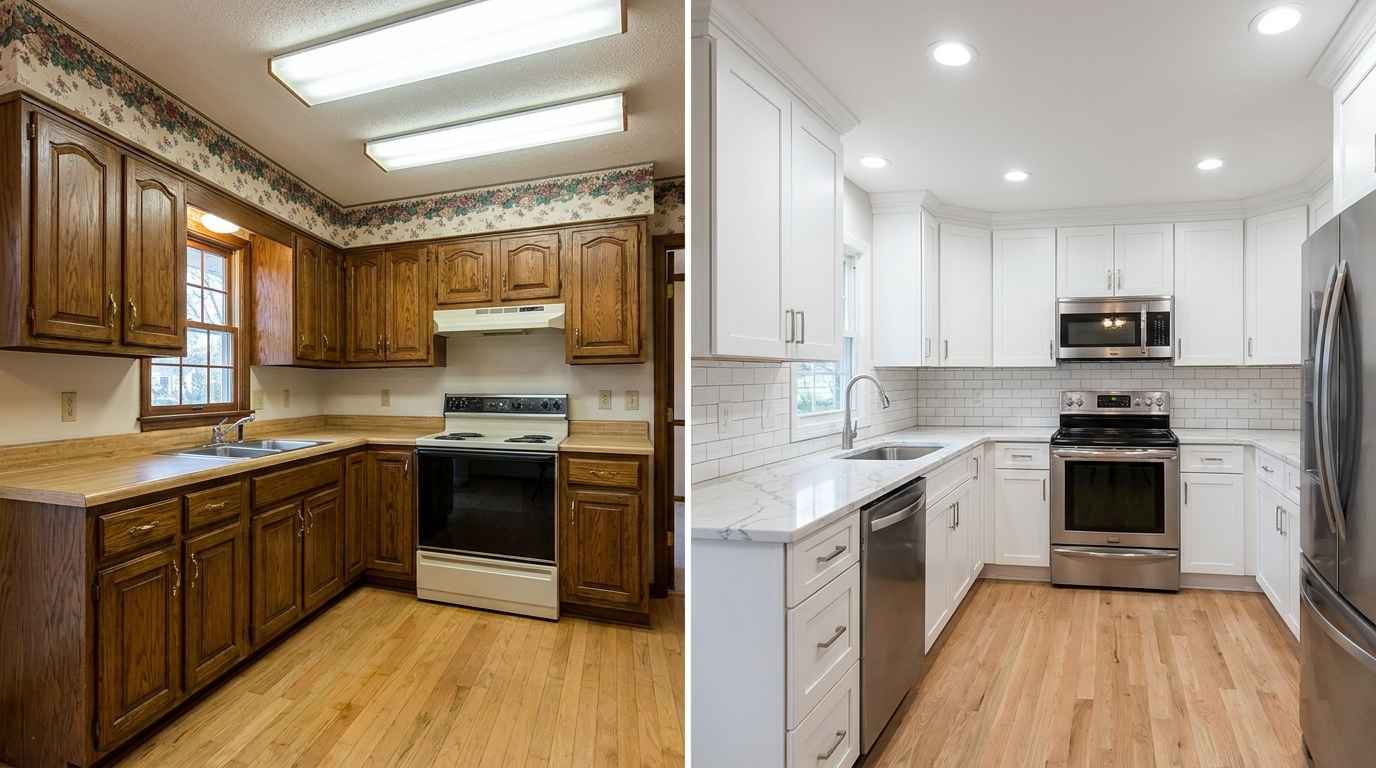
A cosmetic refresh keeps the existing layout completely intact. New cabinet doors and hardware, updated countertops, fresh lighting, a new backsplash, and paint. No structural work, no permits in most cases, no plumbing or electrical changes. Budget range: $8,000 to $25,000 depending on material selections and kitchen size.
This is the smart move when the layout works but the finishes feel dated. A kitchen built in the late 1990s with oak cabinets and laminate countertops can look completely current with new door fronts, quartz countertops, and recessed lighting, at a fraction of the full gut cost.
Mid-Range Remodel
A mid-range remodel replaces everything visible and most of the infrastructure while keeping the basic floor plan intact. New semi-custom cabinetry, countertops, flooring, plumbing fixtures, appliances, and lighting. This is the most common project type for homeowners planning to stay in the home five-plus years. Realistic range: $30,000 to $65,000 depending on material tier.
Full Kitchen Renovation
A full renovation involves structural changes. Removing walls, relocating the sink or range, adding an island, or reconfiguring the entire footprint. This scope requires permits in every US jurisdiction. It also requires a contractor who can coordinate plumbing, electrical, structural, and finish trades across a defined timeline without losing anyone in the handoffs.
This is where most project disasters happen. Not because contractors can’t do the work, but because multi-trade coordination requires genuine project management. When evaluating contractors for this scope, ask directly how they handle scheduling conflicts when a subcontractor misses their date.
How to Find and Vet Kitchen Remodeling Experts Who Are Actually Worth Hiring
Finding names is easy. Filtering them takes about twenty minutes if you know what to ask.
Before signing with any kitchen remodeling contractor, get clear answers to these questions:
- Are you licensed and insured in this state? Ask for the license number and verify it independently through your state contractor licensing board. Texas has its own licensing requirements through the Texas Department of Licensing and Regulation.
- Who specifically will be on-site every day, you or a subcontractor? Many general contractors sell the project, then hand it to subs they’ve barely briefed.
- What does your payment schedule look like? Any contractor asking for more than 10 to 15 percent upfront before materials are ordered is a red flag.
- Can you provide three references from kitchen projects completed in the last twelve months? Call them. Ask specifically about communication, timeline adherence, and how problems got handled.
- Do you handle permitting, or is that the homeowner’s responsibility? In Texas, cities like Houston, Katy, Sugar Land, and Cypress each run their own permitting processes.
- What is your warranty on labor, and how do you handle issues after the project is complete?
The answers to these questions reveal more about operational quality than any number of reviews on Google or Houzz, which are easy to accumulate and difficult to fully verify.
Kitchen Remodeling and Design: Why the Process Matters as Much as the Product
The best-looking kitchens come from a process where design decisions and construction decisions happen in the right order.
Design-build firms handle both design development and construction under a single contract. You work with a designer to develop the layout, select materials, and finalize specifications, then the same company executes the build. This eliminates the coordination gap between what a designer specifies and what a contractor interprets, which is where expensive surprises most often originate.
Contractor-only firms work from homeowner-provided designs or general direction. This works well for straightforward mid-range remodels where the scope is clear. It creates problems on complex projects where design decisions cascade into construction decisions the contractor makes on the fly.
For homeowners in planned communities across Katy, Cypress, and Sugarland, working with a contractor who has local experience matters more than it might seem. HOA guidelines, neighborhood material standards, and regional supplier relationships all affect how a project moves and what it costs. Your Dream Remodeling’s presence across these specific Texas markets means fewer surprises in the middle of a project.
Red Flags That Predict a Problem Before the First Nail Goes In
Most homeowners who’ve had a bad remodeling experience can trace it back to warnings they noticed and ignored. Here’s what to walk away from.
Unusually low bids are the most reliable predictor of problems. If three contractors quote $45,000 to $52,000 and one quotes $28,000, the low bidder either doesn’t understand the scope or plans to make up the gap through change orders. Both outcomes hurt. Remodeling Magazine’s Cost vs. Value 2025 report found that low-bid projects have significantly higher rates of scope disputes and incomplete work.
Vague contracts are the second major warning. A legitimate kitchen remodeling contract specifies exact materials by brand and model number, a detailed payment schedule tied to project milestones, a start and estimated completion date, and a change order process requiring written approval before any additional cost is incurred. A contract describing scope as “kitchen remodel per discussion” protects the contractor. It protects you from nothing.
Poor communication before the contract predicts worse communication during the project. If a contractor takes four days to return a call during the sales process, that response time is their operating standard. You’re seeing exactly how available they’ll be when something goes wrong mid-project.
Permits and Inspections: The Costly Step Most Homeowners Skip
Kitchen remodeling requires permits in most US jurisdictions for electrical changes, plumbing modifications, structural alterations, and gas line work.
Texas municipalities handle permitting locally. Houston, Katy, Sugar Land, and Cypress each have their own processes, timelines, and inspection requirements. A contractor who suggests skipping permits to save time or money is transferring their legal risk directly to you. Unpermitted work creates complications at home sale, can void homeowner’s insurance coverage for related claims, and may require expensive remediation to bring into compliance. That liability stays with the property owner after the contractor is long gone.
A qualified contractor pulls permits as part of the project. It’s not optional and it’s not an add-on you manage separately.
What a Well-Run Kitchen Remodel Looks Like from Start to Finish
Understanding the correct sequence helps you spot a contractor who’s cutting corners before it affects your project.
The process starts with an in-home consultation where the contractor sees the actual space, asks specific questions about how the kitchen gets used, discusses realistic budget ranges, and identifies any structural or systems considerations before design begins. Contractors who quote from photos or phone descriptions are setting up scope gaps.
Design development follows. Whether through a design-build process or homeowner-provided drawings, material selections and layout finalization happen before demolition starts. Changes at this stage cost almost nothing. Changes after demo has started cost considerably more.
Permitting and material procurement happen before a single cabinet is removed. Contractors who start demo before permits are issued and materials are confirmed are creating a predictable disaster. When the cabinets arrive damaged or the countertop lead time is twelve weeks, a demolished kitchen sits unusable for a month.
Construction follows a set sequence: demo, rough plumbing, rough electrical, insulation if needed, drywall, cabinetry, countertops, appliances, trim, and punch list. Experienced kitchen remodeling contractors don’t skip steps to look like they’re moving fast. The sequence exists for practical reasons and breaking it creates rework.
The Real Financial Cost of Hiring the Wrong Contractor
Here’s the number most articles don’t include. According to industry data from the National Association of the Remodeling Industry (NARI), the average cost of a failed kitchen remodel requiring a second contractor to complete or fix the first contractor’s work runs 40 to 70 percent above the original project budget.
On a $50,000 kitchen, that means spending $70,000 to $85,000 to get the result you originally paid $50,000 for. The savings from choosing a lower bidder don’t just disappear. They go negative.
The decision process that avoids this isn’t complicated. Get three written bids from licensed, insured, referenced contractors. Ask the questions in this guide. Read the contract. Verify the license. Choose based on the totality of that evaluation, not on price alone.
Making the Right Call on Your Kitchen Remodel
Searching for kitchen remodeling near me is the beginning, not the end. Homeowners who get kitchens they love for the next twenty years spent an extra two weeks on contractor evaluation before they signed anything.
Your Dream Remodeling serves homeowners throughout Katy, Houston, Sugarland, Cypress, and Richmond, Texas, providing in-home consultations, full project management from design through completion, and contracts that specify exactly what’s included. If you’re in these service areas and ready to move from research to a real conversation, the in-home consultation is where accurate scoping and honest pricing actually happen.
The right kitchen remodeling contractor doesn’t just build what you described. They help you figure out what you actually need, and then they build that on time at the price you agreed on.
FAQ
How much will kitchen remodeling cost near me in 2026? Midrange kitchen remodels in the US run $30,000 to $80,000. Cosmetic refreshes start around $8,000 to $25,000. Full structural renovations exceed $100,000 in many markets. Texas markets like Houston and Katy run slightly below coastal pricing. Always get an in-home estimate since phone quotes are rarely accurate.
How do I find a reliable kitchen remodeling contractor near me? Get three written bids from licensed, insured contractors. Verify licenses independently. Call recent references and ask about communication and problem-handling. Avoid contractors requesting large upfront deposits or using vague contract language.
How long does a kitchen remodel take? Cosmetic refreshes take 2 to 4 weeks. Mid-range remodels run 6 to 10 weeks once materials arrive. Full renovations with structural work and permits take 10 to 16 weeks. The biggest delays come from late material deliveries and permit processing times.
Do I need a permit for kitchen remodeling near me? Yes for most scopes. Electrical, plumbing, structural, and gas line work require permits in most US jurisdictions. Texas municipalities handle this locally. A qualified contractor manages permitting as part of the project, not as something you handle separately.
What should be my questions for a kitchen remodeling contractor? Ask for license verification, references from the last 12 months, who will be on-site daily, how permitting is handled, what the payment schedule looks like, and how change orders are managed. The specificity and directness of the answers tells you more than any review.
What is the difference between a kitchen remodel and a full kitchen renovation? A remodel typically replaces surfaces and finishes without changing the layout. A renovation involves structural or layout changes including moving plumbing, removing walls, or reconfiguring the floor plan. Renovations require permits and cost significantly more.
How do I know if a kitchen remodeling quote is fair? Compare three written quotes for the same scope. If one bid is 30 to 40 percent lower than the others, ask specifically what has been excluded. Legitimate quotes specify materials by brand and model and tie payment milestones to project phases, not calendar dates.
Is it better to do a cosmetic kitchen refresh or a full gut renovation? If the layout works, a refresh delivers strong visual improvement for a fraction of the gut cost. If the layout genuinely doesn’t function, the layout change is worth the investment. Don’t gut a kitchen that doesn’t need it just because the finishes look dated.
What should be in a kitchen remodeling contract? Exact material specifications by brand and model, a payment schedule tied to milestones, start and estimated completion dates, a written change order approval process, warranty terms on labor and materials, and a detailed scope description. Vague contracts protect the contractor.
How do I prepare my home for a kitchen remodel? Clear the kitchen and nearby areas before demo begins. Set up a temporary kitchen in another room with a microwave, coffee maker, and small refrigerator. Expect 6 to 10 weeks without a functional kitchen for a mid-range remodel. Establish communication expectations with your contractor from day one.