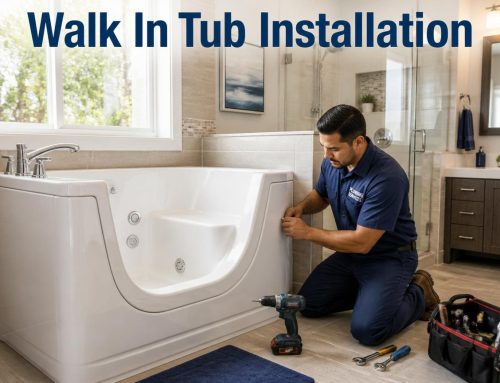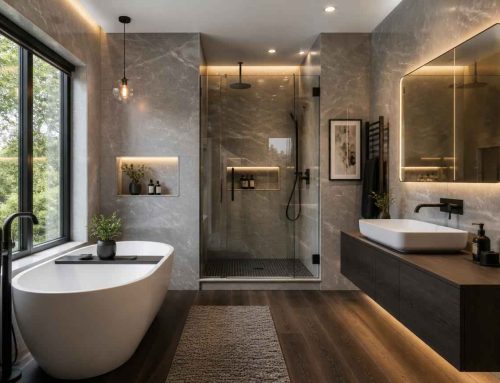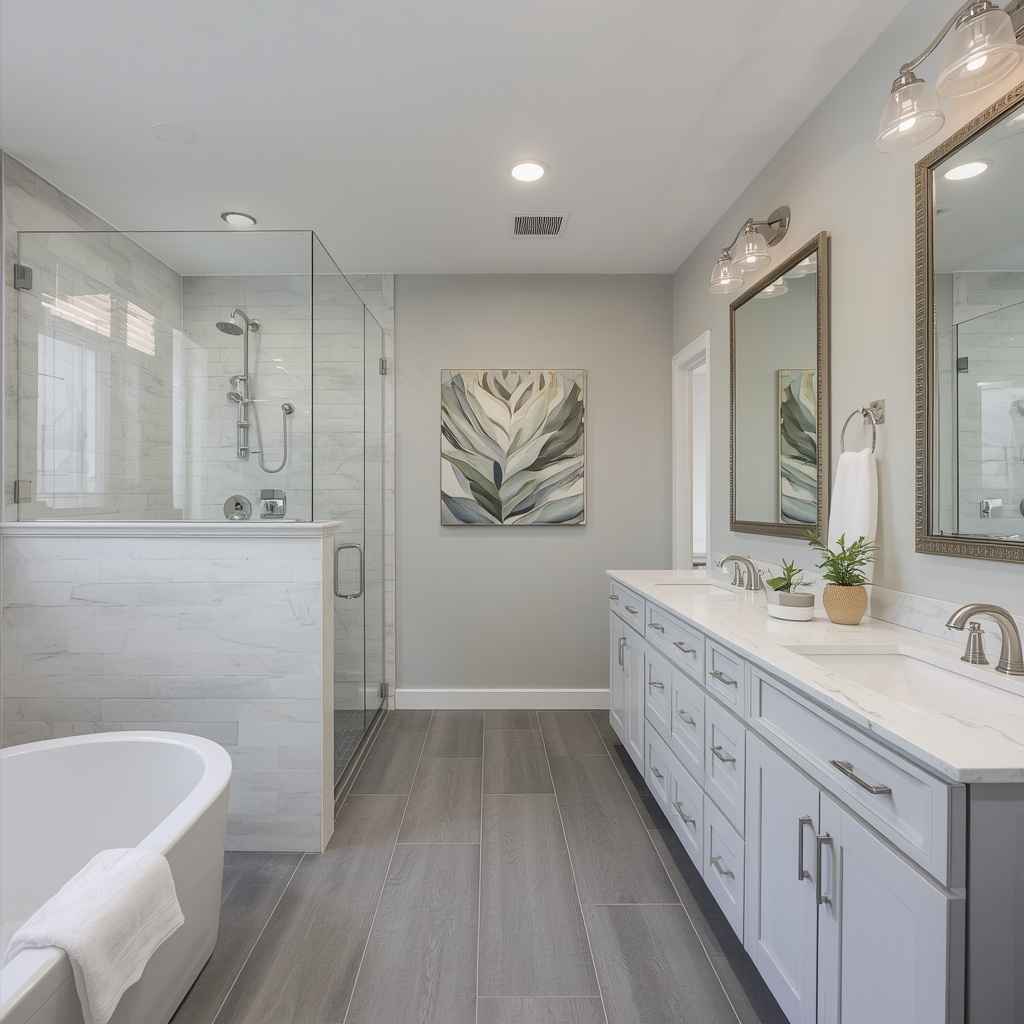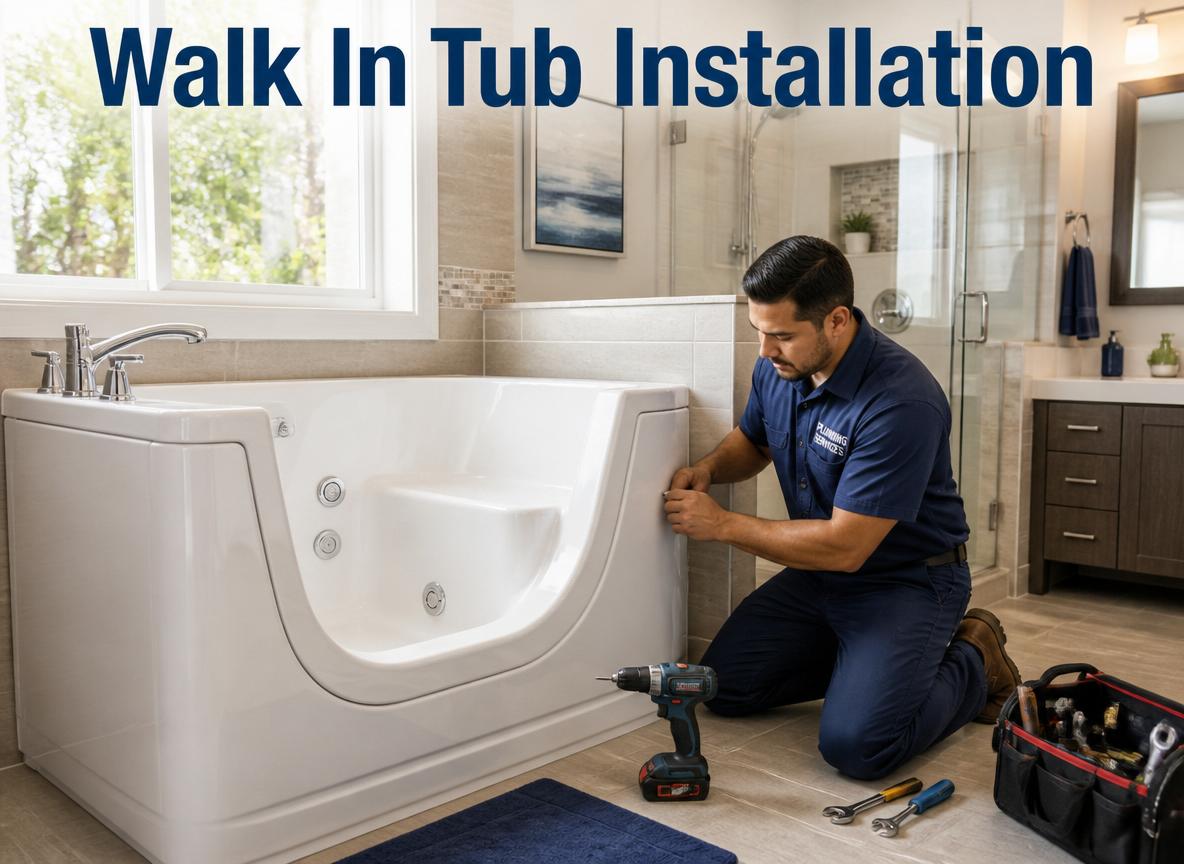
A leaking shower pan, a vanity that’s twenty years out of date, a tub nobody in the house can climb into anymore — that’s usually what sends someone typing “bathroom remodeling near me” into Google at 11 p.m. The problem isn’t finding companies. Any search returns two dozen. The problem is telling the legitimate, properly licensed bathroom remodeling company from the guy with a truck, a Facebook page, and no insurance. This guide walks through how to evaluate bathroom remodeling companies near you, what a real project actually costs in 2026, and where most homeowners get talked into paying for work they didn’t need.
What “Bathroom Remodeling Near Me” Actually Means for Your Search Results
When you search bathroom remodeling near me, Google is pulling from your location data and ranking local businesses by proximity, review volume, and Google Business Profile completeness — not by who does the best work. That distinction matters more than most homeowners realize.
A contractor can rank first with five glowing reviews and zero state licensing verification. Meanwhile, a properly licensed, insured bathroom remodeling company with a smaller marketing budget might sit on page two. The National Association of the Remodeling Industry reported that more than 90% of homeowners experienced at least one issue during their renovation in recent years, which tells you the local pack ranking alone isn’t a reliable filter for quality.
That’s why ranking position should be your starting point for a search, never your final decision criteria.
Bathroom Remodeling Companies vs. General Contractors vs. Specialty Firms
A bathroom remodeling company is a contractor or firm that specializes specifically in bathroom layouts, plumbing rough-ins, waterproofing, and fixture installation, rather than handling whole-home renovations. That specialization is the gap most comparison articles skip entirely.
General contractors can absolutely remodel a bathroom well. But bathrooms are the single room in a house where waterproofing mistakes cause the most expensive failures — mold behind tile, subfloor rot under a shower pan, warped cabinetry from a slow leak nobody caught for eight months. A firm that does twenty bathrooms a year develops pattern recognition that a generalist doing two bathrooms among fifteen other project types simply doesn’t build at the same pace.
When a Specialist Beats a General Contractor
Choose a bathroom-specific remodeling company when your project involves:
- Moving plumbing fixtures to a new wall or layout
- Converting a tub to a curbless or low-threshold shower
- Aging-in-place modifications (grab bars, zero-entry showers, wider doorways)
- Full gut renovations involving subfloor or wall framing repair
- Custom tile work beyond a standard 12×24 install
When a General Contractor Makes More Sense
If the bathroom remodel is one piece of a larger renovation — say, a kitchen and bathroom done together, or a full second-floor addition that includes a new bath — a general contractor managing the whole job under one schedule and one set of subcontractors usually costs less and creates fewer coordination headaches than hiring a bathroom specialist separately.
How Much Does Bathroom Remodeling Cost in 2026?
A mid-range bathroom remodel in the U.S. typically runs between $13,000 and $28,000 in 2026, depending on square footage, fixture quality, and whether plumbing is relocated. That range has moved upward from prior years, largely driven by labor costs and tile and fixture pricing increases that suppliers passed through in late 2025.
| Project Scope | Typical Cost Range (2026) | What’s Included |
|---|---|---|
| Cosmetic refresh | $4,500 – $9,000 | New vanity, fixtures, paint, flooring, same layout |
| Mid-range remodel | $13,000 – $28,000 | New tile, tub-to-shower conversion, updated plumbing fixtures, lighting |
| High-end / gut renovation | $30,000 – $65,000+ | Layout changes, custom tile, heated flooring, plumbing relocation, premium fixtures |
| Accessibility / aging-in-place | $15,000 – $35,000 | Curbless shower, grab bars, widened doorway, non-slip flooring |
Pricing varies by metro area. Labor in coastal cities and major metros runs 20% to 40% higher than the national average, while smaller markets in the Midwest and South often land near the low end of these ranges. Always get this confirmed in writing with a site-specific quote — these figures are planning ranges, not promises.
The Real Cost Factors Most Quotes Don’t Explain
Square footage and fixture quality get all the attention in marketing pages. They’re not actually what blows budgets.
Plumbing relocation adds the most unpredictable cost to any bathroom job. Moving a toilet drain three feet can mean breaking concrete slab, which on its own can add $1,500 to $4,000 depending on access and local labor rates.
Hidden water damage is the second budget killer. In our review of typical mid-range remodels, contractors routinely find soft subfloor or mold behind an old shower surround once demo starts — something no quote can price accurately until the walls are open. A reputable company builds a contingency line into the contract for exactly this reason; one that doesn’t is either inexperienced or hoping you won’t ask.
Permit and inspection fees vary by municipality and are frequently left off marketing-page estimates entirely, even though most jurisdictions require a permit for any plumbing or electrical work.
A short, single-sentence reality check: if a quote has no contingency line for hidden damage, that’s a red flag, not a discount.
How to Vet a Bathroom Remodeling Company Before You Sign Anything
Vetting a local bathroom remodeling company means confirming licensing, insurance, real project history, and payment structure before any contract is signed — not after work has started.
The Licensing and Insurance Check
Every state handles contractor licensing differently. Some states such as Florida and California require licenses for nearly all construction work, while a handful of states, including some in the Midwest, have no statewide licensing requirement at all and leave it to individual counties or cities. Check your specific state’s licensing board website directly rather than trusting a “licensed and insured” badge on a contractor’s homepage — that claim is unverified until you confirm it yourself.
Ask for:
- Active state or local contractor license number
- General liability insurance certificate (minimum $1M coverage is standard)
- Workers’ compensation coverage, if they employ a crew
- A physical business address, not just a service area listing
Reading Reviews the Right Way
Star averages tell you almost nothing on their own. A 4.8 average built on 12 reviews is statistically weaker evidence than a 4.5 average built on 200 reviews spanning several years. Look specifically for reviews that mention timeline accuracy, communication during the project, and how the company handled an unexpected issue — those three details predict your actual experience far better than “they did a great job.”
Comparing Quotes: A Side-by-Side Framework
Getting three quotes is standard advice. What nobody tells you is how to actually compare them, since most homeowners just look at the bottom-line number and pick the middle one.
| Comparison Point | Why It Matters |
|---|---|
| Scope detail level | A vague one-page quote signals a vague project; a detailed quote breaks out materials, labor, and allowances line by line |
| Material allowances | Low quotes often hide cheap fixture and tile allowances that get upgraded later at a markup |
| Timeline with milestones | Quotes without a written schedule tend to slip without consequence |
| Payment schedule | Avoid any contractor asking for more than 10-30% upfront, per standard industry practice in most states |
| Warranty terms | One year on labor is typical; anything less is below standard |
If two quotes are within 10% of each other but one is far more detailed, the detailed quote is usually the more honest one — not necessarily the better deal, but the more reliable estimate of true final cost.
What to Do When the Lowest Quote Isn’t the Right Choice
This is the scenario most buyer’s guides skip entirely: the lowest bid looks great until you realize why it’s low. A contractor underbidding by 25% or more against two other detailed quotes is either cutting corners on materials, underestimating labor hours and planning to ask for change orders mid-project, or simply newer to the market and pricing aggressively to build a portfolio.
None of those are automatically disqualifying. A newer company with strong licensing, solid insurance, and a portfolio of completed work can be a legitimate value option for a straightforward cosmetic refresh. But for a gut renovation involving plumbing relocation or structural changes, the lowest bid is the scenario where the popular advice — “always get three quotes and compare” — actually fails homeowners, because price comparison alone doesn’t surface competence.
Bathroom Remodeling at Scale: Single Project vs. Multi-Unit or Investment Property
Most content on this topic assumes a single homeowner remodeling their primary bathroom. The recommendation changes meaningfully at scale.
For landlords or investors remodeling bathrooms across multiple rental units, durability and standardized materials matter more than custom design — porcelain tile over natural stone, quartz over marble, and a repeatable fixture package across units reduces both cost per unit and future maintenance complexity. A company experienced in multi-unit turnover work will quote differently, often with volume pricing on fixtures, than one that only handles single-family primary residences.
For a single owner-occupied remodel, the calculus flips toward personalization and long-term resale value, since you’re the one living with the design decision for the next decade.
Common Mistakes That Cost Homeowners the Most Money
- Skipping the permit to save time, then having to open finished walls during a home sale inspection
- Choosing tile before finalizing layout, leading to wasted material when plumbing locations shift
- Not asking about subfloor condition until after demo has already started and the surprise cost lands mid-project
- Signing a contract with vague allowances for fixtures, then getting upsold once the budget feels “already committed”
- Hiring based on the lowest price alone without confirming licensing and insurance first
Quick Checklist Before You Hire
Before signing with any bathroom remodeling company near you, confirm the following:
- License number verified directly through your state licensing board
- Proof of liability insurance, dated and current
- Detailed written quote with material allowances broken out
- Payment schedule tied to project milestones, not large upfront sums
- At least one in-person or video reference from a completed project within the last 12 months
- Written warranty terms on both labor and materials
Bookmark this checklist before you start calling contractors — most homeowners forget half of it once they’re three conversations into the vetting process.
Frequently Overlooked Step: Matching the Company to Your Project Type
Not every bathroom remodeling company near you handles every project type equally well. A firm that excels at quick cosmetic refreshes for resale prep may not have the structural and plumbing depth needed for a full gut renovation with layout changes. Before requesting quotes, decide which category your project falls into — cosmetic, mid-range, gut renovation, or accessibility modification — and ask each company directly how many projects in that exact category they completed in the last 12 months. A vague answer here is more revealing than any review score.
Conclusion
Finding the right bathroom remodeling company near you comes down to three things: verified licensing, a detailed written quote with no vague allowances, and a payment structure tied to milestones rather than large upfront payments. Price matters, but it’s never the first filter — competence and documentation are. If you’re ready to move forward, start by pulling three detailed quotes and running each one through the comparison framework above before signing anything. The homeowners who avoid the worst remodeling horror stories aren’t the ones who got lucky. They’re the ones who checked the license before they checked the price.
FAQ SECTION
1. How much does it cost to remodel a small bathroom in 2026? A small bathroom remodel, generally under 40 square feet, typically costs between $8,000 and $16,000 in 2026 for a mid-range update. Costs run lower if the layout stays the same and higher if plumbing fixtures are relocated or the floor plan changes.
2. How long does a bathroom remodel usually take? A standard mid-range bathroom remodel takes three to four weeks from demo to final inspection. Gut renovations involving plumbing relocation or structural work can extend to six to eight weeks, especially when permit inspections add scheduling delays.
3. Should I hire a bathroom remodeling company or a general contractor? Hire a bathroom-specific company for layout changes, plumbing relocation, or accessibility modifications, since waterproofing and plumbing expertise matters most there. A general contractor works well when the bathroom is part of a larger multi-room renovation handled under one schedule.
4. Do I need a permit to remodel a bathroom? Most municipalities require a permit for any project involving plumbing or electrical changes, even in a single bathroom. Cosmetic-only updates like painting or swapping a vanity typically don’t require one, but local codes vary, so confirm with your city or county building department.
5. How do I verify a contractor’s license is real? Search your state’s contractor licensing board website directly using the license number provided, rather than trusting a badge displayed on the company’s own site. Most state boards offer a free public lookup tool that shows license status, complaint history, and expiration date.
6. What’s a normal deposit amount for a bathroom remodel? Most states cap or recommend an upfront deposit between 10% and 30% of total project cost. A contractor requesting more than that before work begins is a warning sign worth questioning before signing.
7. Why did my quote not include subfloor repair costs? Subfloor and structural damage often isn’t visible until demolition begins, so most legitimate contractors quote it as a contingency allowance rather than a fixed cost. If your quote has no contingency line at all, ask directly how unexpected damage will be priced and approved.
8. Is a tub-to-shower conversion worth it for resale value? A tub-to-shower conversion adds resale appeal in homes with at least one other tub remaining in the house, particularly for buyers without small children. If it’s the only tub in the home, keeping at least a partial tub option is generally the safer resale decision.
9. What’s the difference between a cosmetic refresh and a full remodel? A cosmetic refresh updates surface-level elements like paint, vanity, lighting, and flooring within the existing layout. A full remodel involves changing the layout, relocating plumbing, or replacing the shower or tub structure entirely, which requires permits and a longer timeline.
10. How many quotes should I get before choosing a bathroom remodeling company? Three detailed quotes is the standard recommendation, giving enough comparison data without dragging out the decision timeline unnecessarily. Focus on comparing scope detail and material allowances, not just the final number on each quote.